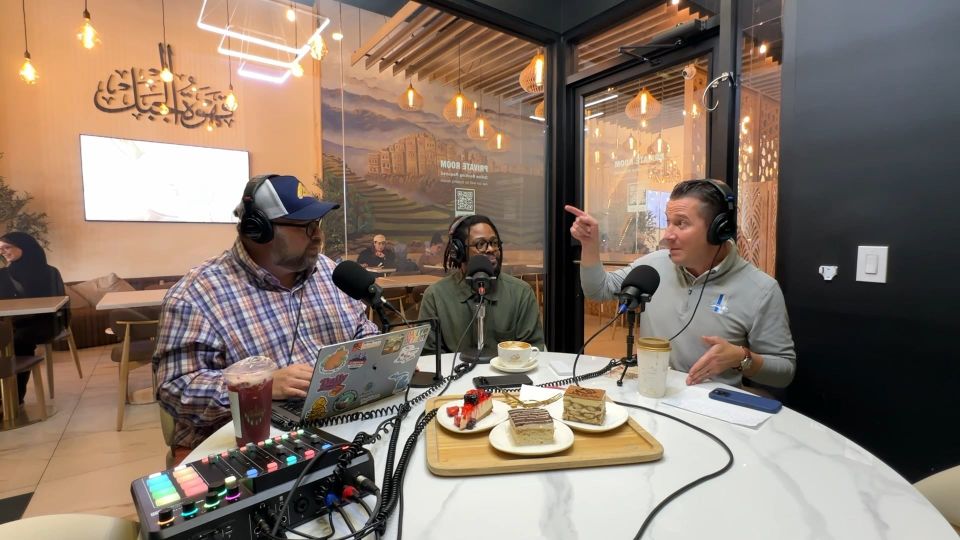




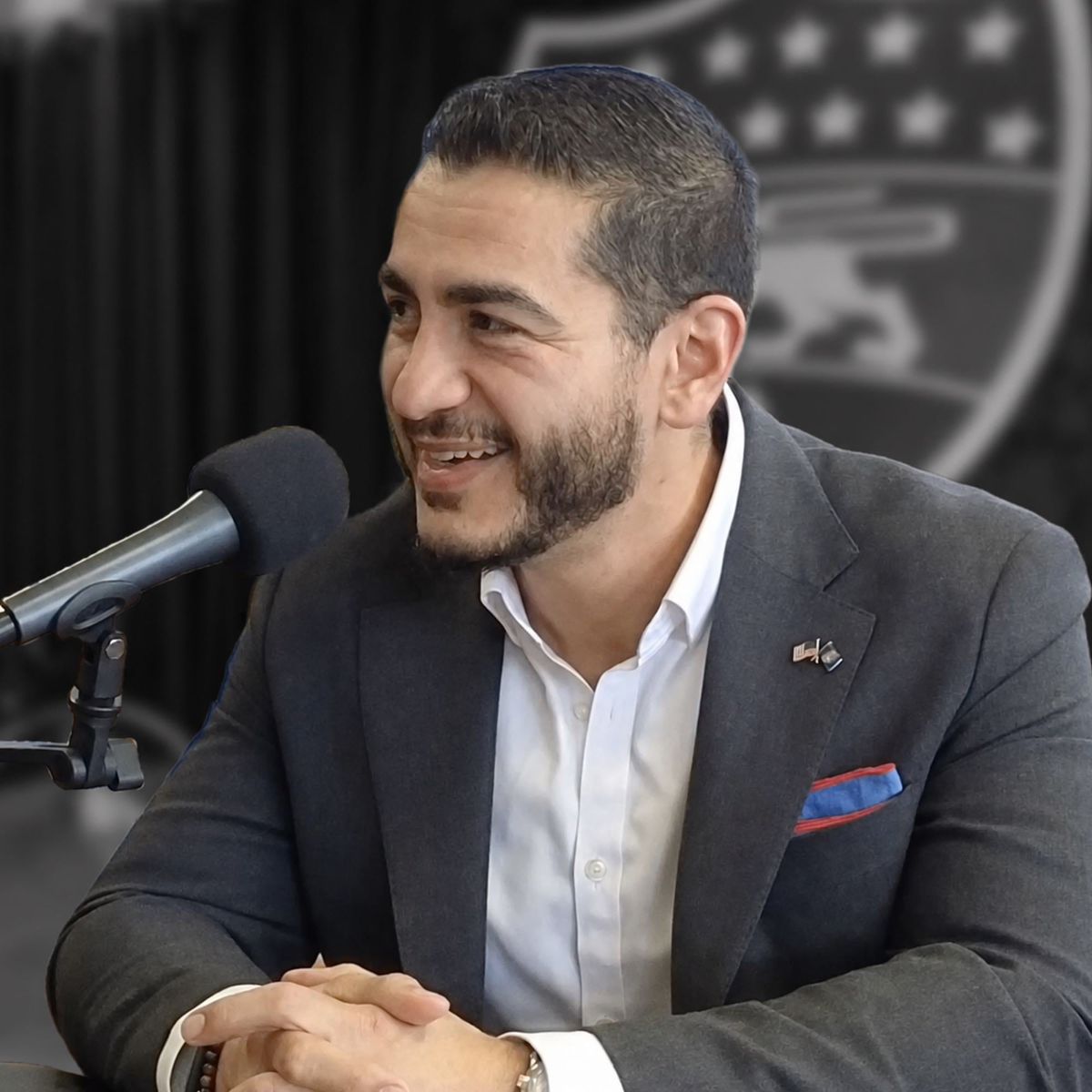
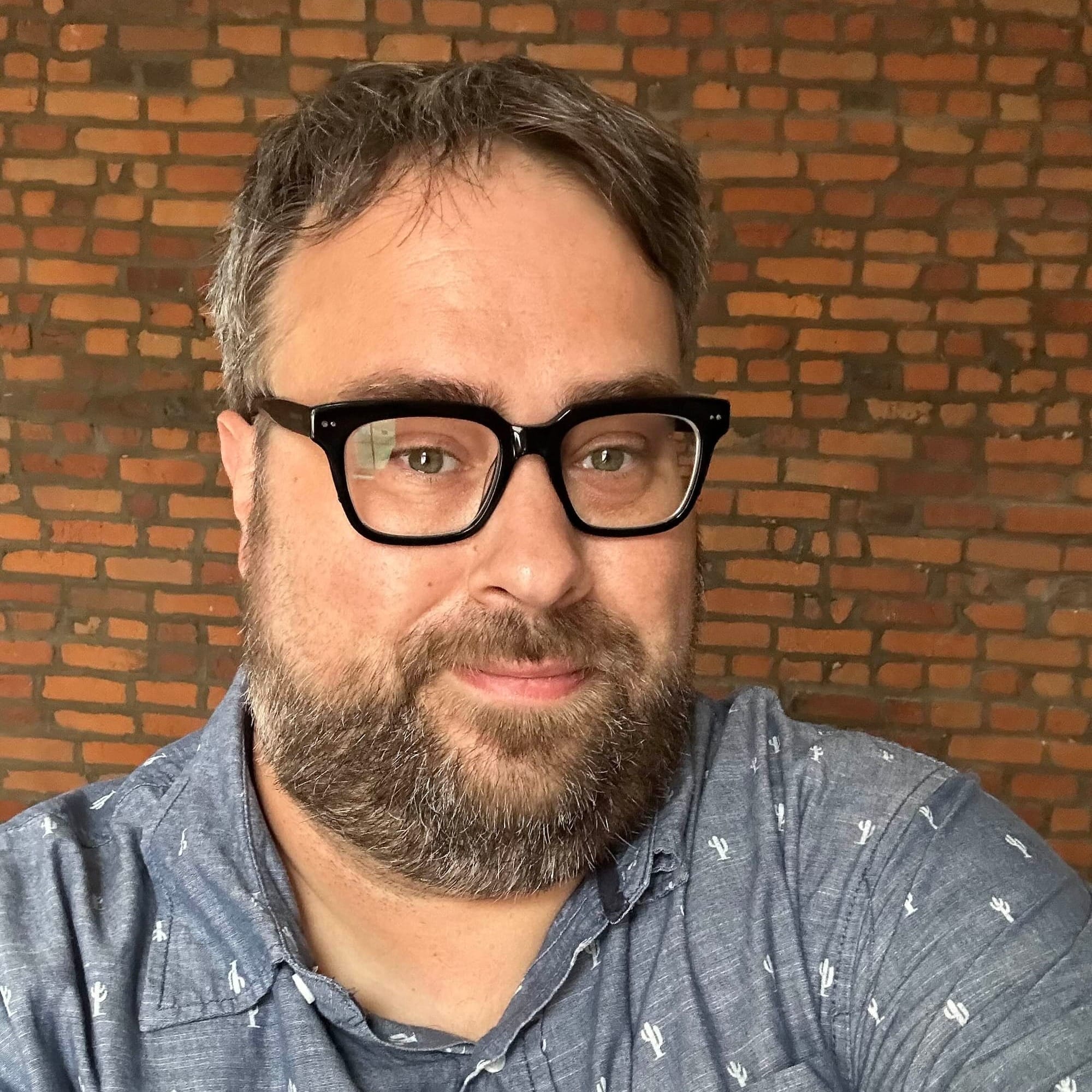
Today on Daily Detroit, we're back into our series of candidate discussions as Dr. Abdul El‑Sayed, Democratic candidate for U.S. Senate from Michigan joins me.
We get into why he's getting back into the political arena, his case for Medicare for All (and his case to people who worry they'll lose their current benefits), and what he thinks a U.S. Senator can really do on healthcare with a Republican in the White House.
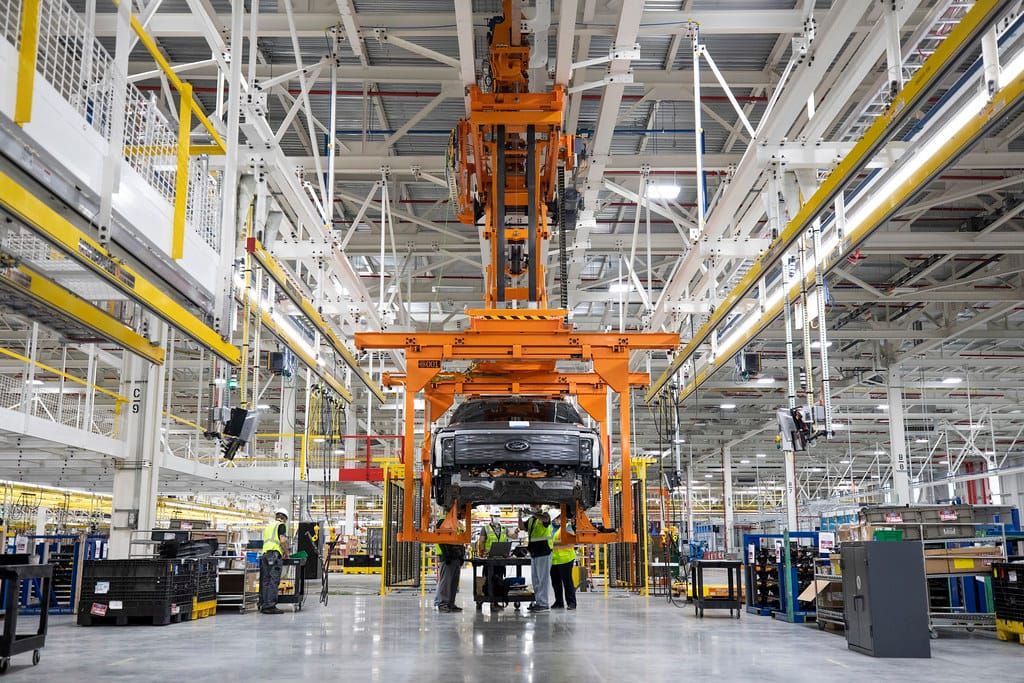
We also talk about Michigan's sputtering economic numbers, how to keep and grow good‑paying jobs here at home, and his ideas for reining in Wall Street short‑termism, banning stock buybacks, and using targeted tariffs to bring high‑growth manufacturing back to the state.
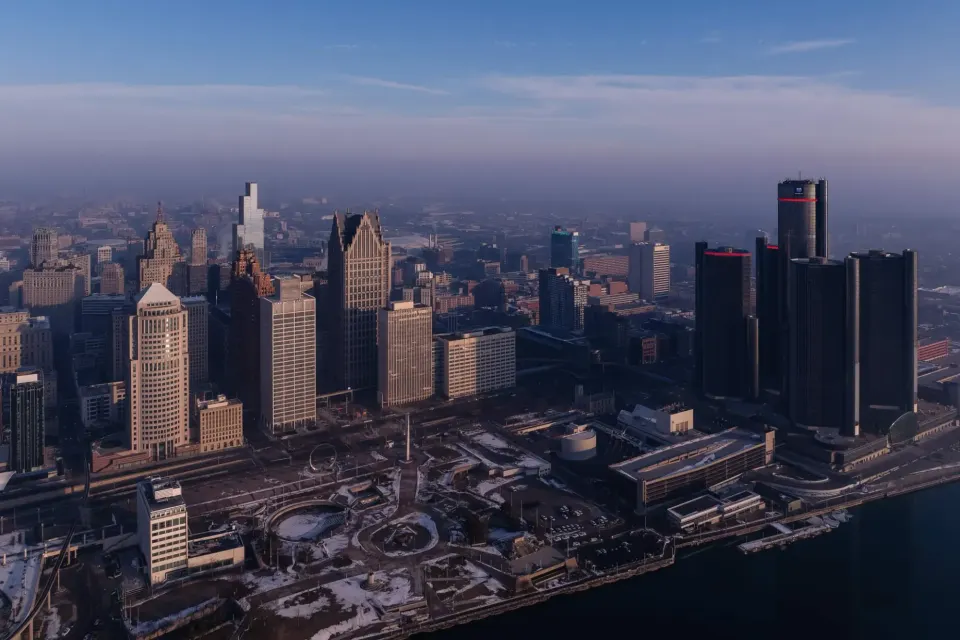
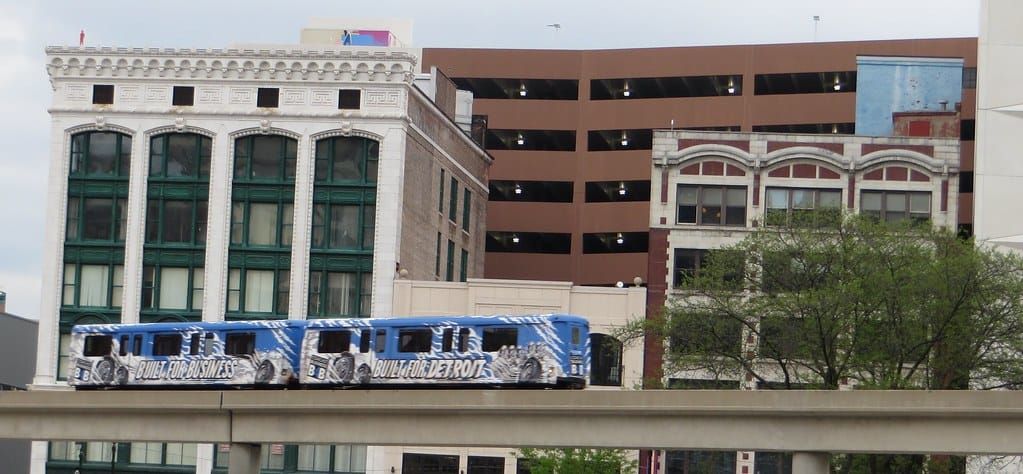
Then we focus on Detroit: Federal support for Detroit's big lifts around affordable housing, transportation, and water infrastructure — from a national housing bill and renter protections to real investment in light rail and fixing our pipes.
And because this is Daily Detroit, we wrap with some fun: Abdul's go‑to coffee shops, pizza spots, bagels, and his favorite places in town.
As always, we're not making endorsements in this race, but we are making space for locally focused conversations that matter. My idea with these conversations for our hyper-local audience is hit on some of the topics national outlets may not.
You'll find a full transcript of this conversation below.
I've already talked to one candidate in this race; and the third is scheduled.
If you've got thoughts, keep it respectful and hit the inbox at dailydetroit@gmail.com or leave a voicemail at 313‑789‑3211.
And if you value episodes like this — consider supporting our work at patreon.com/dailydetroit. We basically can't run ads on political content nowadays. So your support matters more than ever.
Transcript
This has been formatted for our website. Please refer to the original audio before quoting.
Jer: It’s good to see you. I remember back to our conversation when you ran for governor back in 20… what… 18, something like that. All time is a flat circle to me at this point.
Dr. Abdul El‑Sayed: Fair. We all lived through COVID, so I think that’s everyone.
Jer: Why are you doing this again? Why are you subjecting yourself to this? I ask this of most candidates. Why are you here? You have options. There are lots of things you could do. Why are you here?
Dr. Abdul El‑Sayed: I knew my grandmother. She was the smartest, wisest person I ever met in my life, and she never got to go to school. She gave birth to eight kids; two of them died before their first birthdays.
This is a person who never got to go to school despite being the smartest person I ever met. When I would visit Egypt in the summers, she would remind me that the one thing I had going for me that my other cousins did not was that I got to grow up in the United States of America.
She didn’t know this, but I would go 15 hours to Egypt and travel a 10‑year life‑expectancy difference. I could go 15 minutes from where I grew up in Oakland County into either the city of Pontiac or the city of Detroit and travel the same 10‑year life‑expectancy difference.
At some point, you get curious about why people get sick, and you want to do something about it. I became a doctor because I wanted to do something about it, only to realize that our healthcare system was too often part of the problem.
I went into public health, got to rebuild the health department here in the city, and lead Wayne County’s Department of Health, Human and Veteran Services. We did things like put glasses on kids’ faces, take on corporate polluters, put Narcan in vending machines all over our county, and eliminate upwards of $700 million of medical debt.
You realize that too often in our country, despite being the richest, most powerful country in the world, we do not invest in the basic means of a dignified life—the basic means of keeping people healthy in the first place. All those programs I just told you about, you’d have politicians who show up and say, “Well, Doc, how are you going to pay for that?”
Meanwhile, we’re dropping bombs on other people’s countries with money we could be using to provide our own people healthcare or good schools or basic livable infrastructure. I’m running because I think we need leadership that’s going to ask those questions—ask a general, “How are you going to pay for that?” when they draw up war plans to bomb a foreign country, and instead invest our money here in good schools, in basic healthcare, and childcare here.
For me, I’ve known my life is an accident of history—that but for an accident of history, I’d have been born in Egypt rather than here. I’ve been putting all of the chips back in the middle ever since. What does it mean to make sure that you’re invested in opportunity?
My life taught me that abilities, intelligence—all of these things—are evenly distributed. Opportunity is not. I’ve tried to make my life about making opportunity available for everybody.
Jer: And I assume that’s the genesis of your support for Medicare for All.
Dr. Abdul El‑Sayed: Well, look, you train in a healthcare system. You do all this work to memorize physiology, only to watch as the healthcare system you’re training to be a part of is too busy chewing up and spitting out people who cannot afford it, while catering to people who can.
Where I trained in New York City, we had a ninth‑floor pavilion where they had a pianist on the very top, and you had folks flying in from all over the world paying cash. Then in the basement, they would do everything they could to make sure that folks who could not pay were pushed back outside the hospital.
I realized I got into healthcare to take care of those folks our system too often ignores—or worse. Not to take care of folks who had all the means in the world. I wanted to be part of building a healthcare system that took care of everybody.
Everybody deserves the care they need when they need it. In our system, only some people can get it, and therein lies the problem. I want to build a system where everybody gets that care. It doesn’t matter if you are a wealthy oil sheikh or you are indigent and coming in after hitting your head and taking a fall—you deserve the healthcare you need and deserve. Medicare for All would guarantee that.
Jer: I hear everything you’re saying. But often when we even discuss it on the show, I hear pushback rooted in fear. That fear is of losing what people have—whether they have a good contract with their union, or they’re worried that offering this to everyone else is going to mean that they lose.
How does that play out for you, and how would that work?
Dr. Abdul El‑Sayed: Let me lay out what Medicare for All is. Chances are, if you’re privately insured, you have a card that says the name of a health insurance company on it in your back pocket or purse. To get access to that card, you pay $1,000 or $2,000 a month between you and your employer.
There’s a network there, so you can’t get healthcare anywhere—only in the network pre‑negotiated by that insurance company. If you use that card, you’re going to have to pay a deductible, despite the fact that you already paid your premium every two or four weeks to get it. Even after you pay your whole deductible, there’s still a copay.
Now imagine that next to that card, you had another card that was given to you the day you were born and does not expire until the day you expire—hopefully after 120 years of a long, healthy life. That card is good anywhere you can get healthcare. There is no premium, no copay, no deductible—just healthcare when you need it.
It doesn’t matter if you get a job, lose a job, turn 26, turn 65, get married, get divorced—it’s there for you. Imagine the security of that. That’s what Medicare for All is.
I hear folks who say, “In this current system, I’m so afraid of what I’m going to lose,” and they’ve only ever heard from the pharmaceutical industry, the insurance industry, and the hospital industry—folks who tell them Medicare for All would take something away. I don’t think it has to take anything away.
If you want to keep that other overpriced card, that’s fine. But I want you to have the security of knowing that you’ve got that Medicare card there with you. Then you can choose from there.
I talk all day to union leaders who tell me that when they sit down to bargain with management, they have to bargain with a third party at the table—and that third party is the insurance company. They can’t even bargain for a three‑year contract because they don’t know what the premium is going to be next year.
They’re so busy bargaining over the premium that they’re not bargaining for more wages or better retirement benefits. I want every person to be able to choose: do I want additional healthcare coverage above the guaranteed Medicare for All plan I already have, or do I want to bargain for better wages or a better retirement? Let them have the choice from there.
It’s not about what it’s going to take away. It’s about what it’s going to give you. Medicare for All is guaranteed healthcare from cradle to grave without premiums, copays, and deductibles. I think we can have that in the richest, most powerful country in the world.
Jer: Now, if you do get elected, there will be at least two years with a Republican president, which means that ball’s not going to get started right away. What would you want to do in the in‑between time, dealing with that reality?
Dr. Abdul El‑Sayed: Fortunately, it’s a six‑year term. For the first two years, I’m going to do everything I can to start setting the platform for a Democratic president who wants to pass Medicare for All, who wants to keep our tax dollars here, who wants to fight for union rights, who wants to take on the power of big corporations and get their money out of our politics.
Then for the next four years, I’m looking forward to governing alongside that president to get Medicare for All done, to get corporate money out of politics, to stand up for unions, to stand up for a Federal Trade Commission that actually takes on corporate monopolies, to tax billionaires’ wealth so we can pay for good things for everybody, and to keep our tax dollars here at home rather than fighting wars that don’t benefit anybody except the prime minister of a foreign government.
We can do big things by holding this president and this administration accountable while we lay the groundwork to get a Democratic president elected who will fight for Medicare for All, get money out of politics, and put money back in your pocket.
Jer: I want to pivot a little bit, because one of the concerns a lot of our listeners have is around the economic situation in Michigan. We’ve had issues around keeping young talent. We’ve had issues with the auto industry, with parts of it moving to California or other states. There’s a lot going on.
Michigan’s economic numbers have not been so hot lately. That’s just a fact. As a U.S. Senator, one of the key things is federal dollars—to help fill in gaps, to support, to help make things happen. What would your approach be as a senator to help make more stuff happen economically for Michiganders?
Because that is a concern, right? If you’re going to hold corporations accountable, but people also need jobs, how do you balance that?
Dr. Abdul El‑Sayed: For too long, when we talk about economic development in our state, it has meant we offer corporate subsidies to big corporations promising 200 or 500 jobs—only to watch as those jobs never materialize or get offshored and automated.
I believe in the ingenuity, entrepreneurship, grit, and grind of Michiganders. I believe that if, instead of investing in big corporations, we invested in revolving loan funds for small businesses, you could have the kind of economic opportunity where individuals build new businesses locally, create jobs locally, and keep spending their money locally. We need to start investing there.
We also have very strong legacy skills. Michigan is still the best place in the world to design and build a car, and I think we need to continue to be that. The problem is that has been undercut by a kind of corporatism and Wall Street‑driven politics that leaves us focused more on the short‑term quarterly bottom line than long‑term innovation and productivity.
I think there are reforms at the Wall Street level that need to happen. Rather than being held accountable only to shareholder value every quarter, CEOs need to be thinking about long‑term profitability. If you’re a CEO and part of your paycheck comes in the form of stock, I don’t think you should be able to unlock that stock for ten years. That way, you’re making decisions about what’s going to be good for the company in ten years rather than just this quarter.
We need workers on corporate boards so workers’ interests are represented. We need to ban things like stock buybacks, where corporations juice their stock price just before the quarter ends so they look better on paper instead of investing in research, development, and worker well‑being. Those are all things we could do to invest in the long‑term viability of our automotive industry.
I also believe there’s a version of tariffs that can have us building new stuff in Michigan. The version we saw from Donald Trump was, like all things Donald Trump, ham‑fisted, chaotic, and self‑serving. But there’s a version that makes sense. Hear me out.
I think of NAFTA like cancer for our economy. If you want to treat cancer, any doctor will tell you one of the viable treatments is chemotherapy. But if you give your patient all the chemotherapy all at once, you’re going to kill your patient. That’s what Donald Trump has done.
There’s a version in which we say: what are some high‑growth manufacturing industries we could invest research and development dollars into? Then, how could we use a targeted, thoughtful, specific tariff regime to protect and incubate those high‑growth industries as they build and grow—protecting their role in the domestic market—and then, working with trading partners, start to bring those tariff regimes down as those industries grow and mature?
That is a mature, thoughtful approach to reshoring and onshoring important growth industries of the future. I’d like to drive that work.
And look, I’m the only candidate in my race who’s never taken a dime from a corporation. I’m the only candidate in my race who has not voted on a corporate tax break, who has not voted in support of a DTE. I’m well‑placed to stand with and for workers as we think about what kind of economic viability makes sense for all of us—building a more mature, well‑rounded, small‑business‑oriented economy that can grow here in Michigan.
You know what I’m betting on? I’m betting on the grit and ingenuity of Michiganders, and that’s never been a bad bet.
Jer: The federal government has a huge role in places like Detroit, obviously. One of the challenges Detroit and Metro Detroit have—and I focus on that because that’s our podcast—is infrastructure.
You think about things like transit and affordable housing. All that stuff touches the federal government. Transit systems aren’t built without federal help. Housing is often supported by the federal government. Many people may think it’s the city that puts up that money. Often that’s money flowing through the city, whether it’s Detroit or any other city in the region.
How could you align to help support lifting up communities like Detroit and use your office to help Detroiters?
Dr. Abdul El‑Sayed: We’ve got major infrastructure gaps in America right now, and we need major investments in infrastructure. I’ll point to three, and you named two of them.
The first is housing. We need a major housing bill in America. Everywhere I go, it’s not just Detroit—go to Escanaba, Marquette, Grand Rapids, and they’ll tell you, “I can’t afford housing.” We need massive investments in building affordable housing.
That should come with an agreement with local communities where we rethink some of the zoning and licensing that makes it so hard for developers who want to build affordable housing to actually build. We need reforms that align incentives around building affordable housing so a developer doesn’t need an army of lobbyists and lawyers just to clear all the regulatory steps—which basically gatekeeps all but the wealthiest developers.
We also need regulations. I think we need a housing bill of rights for renters. We should stand up to big tech corporations in housing—folks like Airbnb and Vrbo—who allow capital from, say, a couple in New York City to buy a home in Detroit and collect rent off that home, facilitated by Airbnb and Vrbo.
Don’t get me wrong, I like staying at Airbnbs and Vrbos. But I think they need to be paying into the system so there’s still affordable housing for people who actually live in the communities where those Airbnbs and Vrbos are located. I also don’t think corporations should be able to own homes and speculate on them when they’re taking those homes off the market for would‑be buyers.
We need a massive investment in down‑payment support so folks actually have the capital to get into the housing market sooner.
The second piece of infrastructure, like you said, is transit. Part of that is roads and bridges. We need to upgrade our roads, we need to upgrade our bridges—we’ve still been talking about “fixing the damn roads” eight years on.
There’s also space for light rail and investing in public transit in ways that connect our local communities. I’m glad to see that’s going to be on the ballot here in Wayne County, connecting many of our communities into Detroit and back out into outlying communities.
The third is water infrastructure. We’re surrounded by fresh water here in Michigan, and we keep having bad stories about water—whether it’s water shutoffs, water backing up into your basement, or lead in water. That should not happen.
Michigan shows that it’s not about water access; it’s about water infrastructure. You hear this all over the country. We need massive investments in how we move and purify water so you don’t keep having water backing up into basements in homes where people can’t afford the water they need to drink. That’s a choice we have to make collectively at the federal level.
Jer: I appreciate all the serious questions, but I’ve got something fun to end with. I ask a lot of people this.
If someone asks you, “Abdul, where do I go—whether to get a bite to eat or whatever?” Where do you go? Where is the spot?
Dr. Abdul El‑Sayed: I’m a big coffee fan. There’s a ton of really good coffee. A couple of my favorites are Alba, Anthology, and La Ventana—those are great spots for coffee. If you go to Alba, make sure you get the egg sandwich as well.
For a bite to eat, it depends what you’re interested in. Anybody who knows me knows I max my protein. If I need to max my protein, I’m going to Dearborn Meat Market. The hard part is you can’t have dinner at Dearborn Meat Market. I’m trying to get them to rethink that, but it’s a great lunch spot.
Jer: You could just bring a grill, couldn’t you? Drag it to the back of your car.
Dr. Abdul El‑Sayed: I could, but their grill is fixed into the wall. I highly recommend it—if you’ve never been there, go visit Abe and tell him I sent you.
For a slice of pizza, I’m going to Sicily’s in Southwest Detroit. I love Detroit‑style pizza, but anybody knows that after the third slice, you start to feel some of that oil in your gut. I don’t know how my guy does it, but his dough—he’s got a three‑ingredient dough—is gooey and crispy at the same time, and it’s light. I don’t know how he does it. He uses the same dough for both his New York style and his Detroit style.
I also love Supino. I’ll take Supino’s New York‑style pizza over a lot of New York‑style pizza in New York—it’s phenomenal.
If I’m going to dinner, there are a couple of spots I really enjoy. I haven’t tried Medusa, but I hear it’s awesome. I really love SheWolf, which is fantastic.
For a good bagel, I’m going to Bev’s Bagels—they’re fantastic. If you’ve never been there, it’s excellent. The coffee shop next door is also really good.
If I’m going to show someone something, it’s the inside of the Guardian. I had the privilege of having an office in the Guardian for two and a half years.
If I’m going for a walk, the Dequindre Cut. If I’m looking for an outing with my family, it’s going to be Eastern Market. The Avenue of Fashion is also a really amazing walk—with some incredible food out there.
If I’m buying a hat, obviously we all know Harry. And then a day at the ballpark is always a lovely day. We’re blessed to have some of the best athletic programs in the country.
I’m deeply grateful to have been able to serve this city, live in this city, and experience the city and its incredible people. Detroit is a gem, and I think we take for granted sometimes that we live at the crossroads of American history right here in Detroit.
My dad immigrated here to go to Wayne State in 1978. That’s when my Detroit story started, and I’m really grateful he came to Detroit and that I got to be born and raised in Southeast Michigan. I love this place.
Jer: Well, Dr. Abdul El‑Sayed, Democratic candidate for U.S. Senate from the great state of Michigan, thank you so much for your time on Daily Detroit. I’m sure we’ll catch up again soon.
Dr. Abdul El‑Sayed: Good to see you. Thank you for having me. Looking forward to it.