
From Avalon Street to City Hall: Mama Shu’s Bright Vision for Highland Park
 Jer Staes
Detroit, MI
Jer Staes
Detroit, MI
Player
Show notes
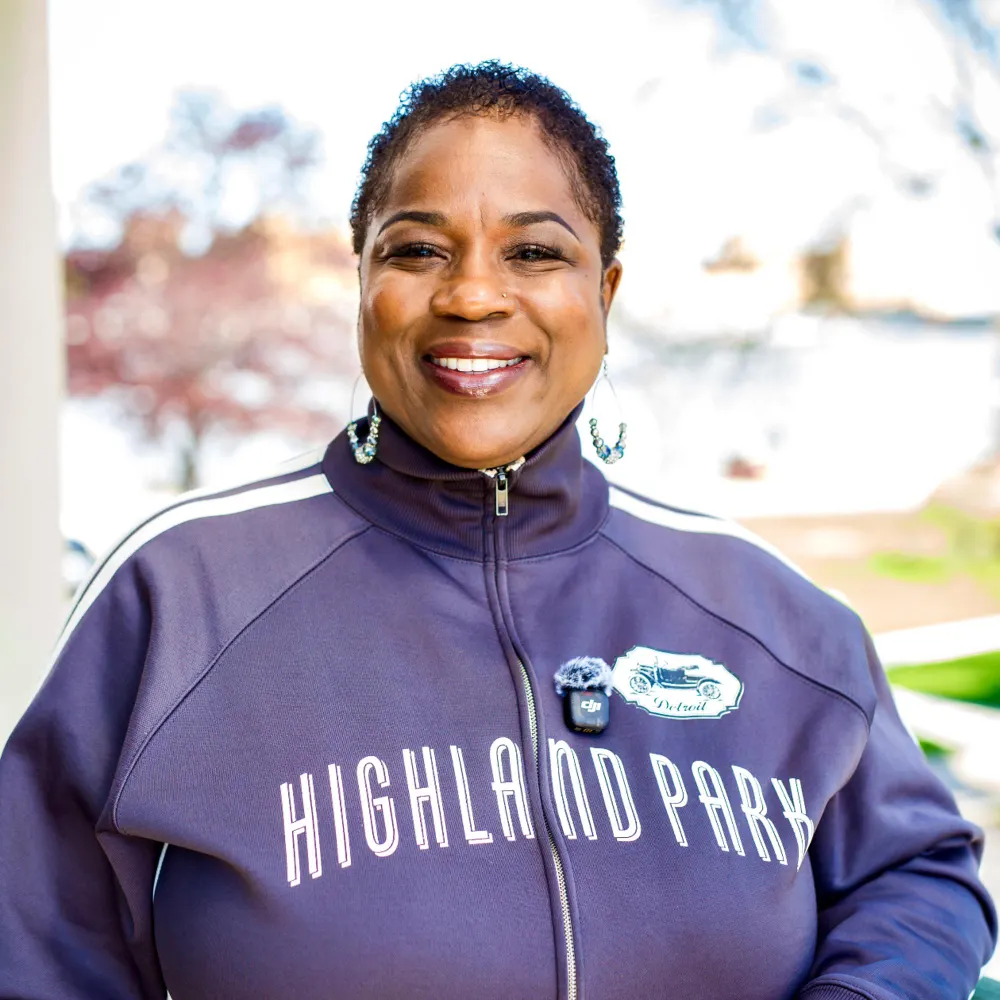
Today, I sit down with Highland Park mayoral candidate and Avalon Village founder Shamayim “Mama Shu” Harris.
We dig into how she’s turned one of the city’s most notorious blocks into a grassroots hub with streetlights, a homework house, basketball courts, and shipping-container retail.
We also talk about what that experience taught her about transforming blight into beauty, rebuilding housing and neighborhood businesses, and why she believes Highland Park can stand strong as its own city.
A full transcript of the conversation is below.
More information: https://www.mamashuformayor.com/
As always, if you've got feedback - 313-789-3211 or email us, dailydetroit - at - gmail - dot - com.
For a full transcript, visit the Daily Detroit website.
As always, thanks to our members on Patreon for supporting work like this.
Episode Transcript
This transcript was lightly edited for posting. Please refer to the original audio before quoting.
Jer: It’s been a long time. Welcome back to Daily Detroit.
Mama Shu: Thank you. Thank you, Jer. It has been a long time, about eight years.
Jer: Yeah, I remember our conversation on the porch. Why don’t we start there? What have you been up to over the last eight, 10 years? Because I know you have been somebody who has taken Highland Park so close to your heart and done so much. So, for people who maybe don’t know or maybe don’t take that little turn off of Woodward to see what’s happening, what have you been up to the last few years?
Mama Shu: Oh boy, a whole lot, and it’s been so exciting. We’ve really been expanding Avalon Village. I’m the CEO and founder of Avalon Village, and it’s located on Avalon Street in Highland Park, Michigan, between Woodward and Second. We’ve just grown a lot since we last talked. We’ve built basketball courts. We got the homework house finished — probably when you came to talk, it was just beginning and still in rough stages. We have some shipping container retail spaces now, and oh my goodness, just a lot of things. The street has been renamed Avalon Village. We have street lights. So many things have happened.
Jer: And for context, for people who don’t know, in Highland Park, that’s a big deal.
Mama Shu: It is a big deal. In 2011, unfortunately, our street lights were repossessed, and approximately 1,100 to 1,200 poles were pulled up out of the ground. We couldn’t afford the electric bill as a city, so the administration made a decision to have them pulled so the bill wouldn’t keep piling up. That was the choice. So some streets are left with lights, but mostly all of the residential areas do not have street lights.
Jer: Wow. What was the inflection point for you to say that you wanted to help bring that light back to that street — the homework house, the shipping containers, all of that? It is a huge move, right? When I think about community development, I get so many people who say they want to do this or that. And you’ve done it. You did it. So there had to have been something very close to your heart pushing you for that, right?
Mama Shu: It did. I was born in Highland Park, too, at the DOH Detroit Osteopathic Hospital years and years ago. Living on Rhode Island and coming back to Highland Park, doing business and living on Rhode Island, Avalon Street just couldn’t get any more dead to me. You know how something’s just beaten into the ground. It was one of the most notorious blocks in Highland Park, that and another street, Pasadena. There was a lot of crime and everything.
It was once beautiful, of course, but that was the reputation of it. I used to see this block and I was like, you know what? I want to go over there and build and do my ministry over there. I’ve been a minister for 25 years this year — I celebrate October 19th as 25 years. I’m like, I’m going to go over there and really just build that block up.
And it was six months after my baby boy, Jacob, became an ancestor. He got hit by a car, and so we moved, got over there, and I just had the vision. It’s been a healing experience to work on it. But I decided I don’t want to live in blight. I don’t want to live with raggedy houses around me. And I knew other people didn’t either. So instead of just complaining about it, I started picking up trash, lot after lot.
Jer: Why didn’t you move? Because so many people look at that situation and they go, I’m out of here, right? Why didn’t you move?
Mama Shu: Because there’s just something deep down inside. I’m like, you know what? This is where I live. That happened, and the fire inside of me to really continue to build was still there. When you already see a vision and everything is rolled out in front of you, you keep working toward it. So really, Jer, it’s about understanding that things happen in your life.
I had another son who got killed five years ago. I’m going to tell you, that made me a little bit like, you know what? I’m sick of this. It was fleeting, though. I’m still here, but that one shook me a little bit more. Still, I’m on the vision. I still want to stay on course, and it’s important. It’s important for Highland Park, and it’s important for someone to be really committed and stay and just make it happen.
Jer: You know, this is something personal, but I’m someone who lost my mother when I was 10. And when you lose family like that, it’s not the same. It’s not the same. But for me, it forever changed me and how I look at the whole world differently than maybe other people, when you realize the worst can happen.
Mama Shu: Yes, yes. And to me, the worst had happened, and that’s what makes me feel really invincible in doing my work.
Jer: We’re here, right? You’re here, right? You’re doing it.
Mama Shu: Right. I’m doing it. So now I’m like, shoot, I’m not even scared of anything. Let me just go. I ain’t scared if somebody says no. I’ll just keep going. That’s what keeps me going, too. Really, the fearlessness of whatever it is unfolding. And so knowing that the worst has happened, that really just keeps me going and definitely keeps the fire going, for real.
Jer: Okay, so you’ve been this advocate, you’ve been a minister, you’re somebody who’s invested in this community when a lot of people, honestly, maybe wouldn’t, right? Why move from that to run for mayor, the political office, right? Being in office is a different story. What was the journey to say, I’m going to go for this?
Mama Shu: Several years ago, in 2010 — and a lot of people don’t know this — in 2010, 2011, and 2015, I actually ran for City Council. I didn’t win a seat, but I’ve done some things in Highland Park already. I was on the Highland Park Charter Revision Commission, which I did for three years. I was the chairperson. I was the president of the Highland Park School District. Those kind of things, the commission, the housing commission.
So I’ve already done some work. I also was a police officer for six years and the first lady chaplain in the Highland Park Police Department. So what I’m thinking is, okay, now I’ve done this. I’m thinking about making it on steroids and spreading it throughout the city. I figure I’m able and capable of administrating and organizing and making relationships to make things happen in the village for Avalon Street, which is a part of Highland Park. It’s just a chunk of Highland Park that I was working on. So I figure I can go ahead and scale it and come from the hood to City Hall.
Jer: So, when you look at it from a citywide perspective, what are the three most important issues that Highland Park is facing? Because if people don’t know, Highland Park is a very small city, population-wise, that is in what is called an enclave. It’s completely surrounded by other cities. It has a long history. The Model T plant was there. In its heyday, it had a population density that was close to what Brooklyn and New York is today. There’s been a lot of change. What are the three things for you that are most important to focus on in the role as mayor?
Mama Shu: One of the things that I’m focusing on right now is transforming blight to beauty, getting rid of a lot of the blight. The blight causes hopelessness. It’s disease. It’s unhealthy. We need to get a lot of those old structures down. We need to clean out, get all of that organized, find out who owns those old homes, those old spaces, and basically rebuild. That’s one of the things — really getting the city in order that way. It’s almost like you have to clean up something to be able to see what you’re working with. That’s clearing the blight inside and out.
Another thing that I would do is increase the population, really build more housing. When people come to Highland Park, there’s not a lot of housing, and we own a lot of land ourselves. It’s time to really start building on that land and maybe making duplexes and homes for young folks to bring their families and maybe some of the Highland Parkers who used to live there, so they can come back and rebuild.
One of the other things, economically, is rebuilding the space. We need beautiful eclectic shops and spaces where we can have businesses. That is very important, too. We need revenue to come into the city and really create things that can draw folks there. Those are three things. There are a lot of other things, too, but those are three of the things that I would continue to work on. Build those on a scale with Avalon Village, but really take it to another level and spread it, like I said.
Jer: Yeah, there’s a lot of challenges, too. At least as I’ve looked into it, and feel free to correct me, but there are a lot of challenges that Highland Park faces because it’s not Detroit, right? A lot of the energy around bringing back Detroit, and Highland Park being in that and being such a smaller group, it makes it difficult.
The city of Detroit, because of its size, has the ability to access a bunch of tools that the city has. Some people like them and some people don’t like those tools. You could talk about the public service departments, land bank, and so on. What are some of the ways that Highland Park maybe could work with Wayne County or do some other things to jump-start some of that progress in Highland Park?
Mama Shu: One of the ways Wayne County could help, and actually we do have a relationship with Wayne County already for about seven years, is that they donated two houses to Avalon Village in 2017. We made one of them the healing house, and another one is the go-back project house that we’re working on. Both of them we’re working on as we speak.
But one of the ways is to help us put together what I want to create, called the Blight to Beauty Task Force, to really get some funding and help to do what I was talking about — clearing out a lot of blight, really attacking those things, really helping us get people in there who can help with the blight, hire more ordinance officers, things like that that can tackle some of the problems. I think relationships are important in Highland Park.
I think strong relationships are important, and we need to make more of them and not be afraid to make them, and to really connect. I think sometimes the small city is afraid of being sucked up by Detroit, you know, those rumors that Detroit is going to absorb Highland Park and annex it and all of that.
Jer: So are you someone who really believes that Highland Park should remain a city strong and on its own?
Mama Shu: I believe that it can. I really do. I believe that we can bring it back. I know a lot of people may not think about it like that, but I do. I thought that about my own space of living, and it was like nobody wanted to live over there where I live. A lot of people don’t want to live in Highland Park, but a lot of people do. So I definitely think that it could be resurrected.
Jer: And part of that also obviously we’ve talked about the county. Part of that also is the state of Michigan. So, what are ways to work with the state to help advance some of those goals?
Mama Shu: The state of Michigan — we have a lot of land in Highland Park that’s owned by the state of Michigan as well. And we have a lot of creative people in Highland Park that are creating things in different pockets. I think making relationships with their land bank, to be able to create different types of programs and build houses on those lands, would help too.
That’s where I want to be able to have a relationship with really the county and them also, to build housing in some of those spaces. The city does own a lot of land, too, but it is county land and it’s also Michigan state land bank land there, too.
Jer: I would be remiss if I didn’t talk about education. It’s a very important thing. What is the state of education in Highland Park? And I know that it’s complicated. You’re not running for the school position in this case. But what are some of the things that you would like to see happen and ways to push some of that forward?
Mama Shu: Like I said, I was on the school board for four years, and so I do have a good relationship with our board president, Cheryl Sanford. They want to build a high school. Eventually, they do want to get a high school. We only have one school under our district. It’s a K to eight, Barber. And then we do have another charter school called George Washington Carver. So they’re both K to eight, and that’s it.
Jer: So for listeners who don’t know, then what happens to kids once they get past eight?
Mama Shu: When they get past eight, they go to other schools in other neighborhoods. And so we lose our kids, school-wise. They can only go up to a certain point. That was one of the reasons why I built the homework house, too. We were under emergency management when I started building the homework house.
Really, it was to help fill in the gaps, to at least have somewhere for them to come after school to study and get their homework done and all of that. But I definitely think we have so much land in Highland Park that we can collaborate with the school board and be able to have space for a new high school and build something from the ground up.
Right now, I believe they’re talking about adding a ninth grade and doing it grade by grade like that to build up. But that’s what I know. I would definitely collaborate and have a good relationship. A lot of things are about good relationships.
Jer: What’s something, you know, obviously some of our listeners will be in Highland Park, but a lot of people might not know as much about Highland Park. What’s some fun fact or something interesting that you’d like to share that people might not know about your community?
Mama Shu: A fun fact about Highland Park: it was called the City of Trees. We had beautiful trees that lined the blocks and almost created a big canopy. It was just so beautiful. We don’t have that anymore, but that is one of the things. We were the City of Trees.
Jer: All right. And if somebody wants to get a bite to eat, where do they go? What would be your pick in Highland Park? And you can pick a couple. I know it’s hard to pick favorites for anybody.
Mama Shu: I would pick Chef Z. It’s called Don’t Cook Tonight. I like that name. That’s the name of her business, Chef Z, Don’t Cook Tonight. She’s an independent caterer and a chef. She caters a lot in Highland Park and also in Detroit. That’s one of the places.
And that’s one of the things, too, Jer, that we’re actually lacking. We do have Popeyes, we have Churches, we have those types of restaurants there, but nowhere like a sit-down family restaurant, and we really want that. There are some, and then there’s also Three Sisters right on Hamilton. That’s a good spot to grab something, too.
Jer: Well, Mama Shu, where can people go if they want to know more and support what you’re doing?
Mama Shu: You can go to theavalonvillage.org to learn more about the village work. And as it relates to me running for office for mayor, you can go to mamashuformayor.com.
Jer: All right. Well, you know what? So good to see you. Let’s not make it so long until next time.
Mama Shu: Yes, Jer. Thank you. Thank you for the invite.
Chapters
No chapters for this episode.
Transcript
No transcript for this episode.
No matching lines.
Hosts & Guests
Comments
Up next
All episodes
Video People Mover Expansion? Dearborn Coffee Week, and a Downtown High-Rise in Danger
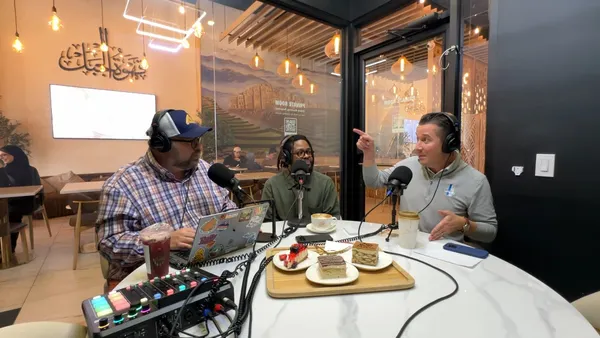
Today we are on location at Jabal Coffee House on Mason Street in West Dearborn to kick off Dearborn Coffee


Video Inside The $2.2 Billion Plan For Detroit's Renaissance Center
The RenCen was built for a world, and a way we used to approach cities, that simply no longer exists. We unpack the math, demolition mechanics, and new vision for Michigan's tallest complex.
Video New Spots Opening Soon & What Michelin Means for Detroit (w/ Melody Baetens)
The Michelin Guide is bringing its Great Lakes ceremony to Detroit next April, and people have a lot of questions.