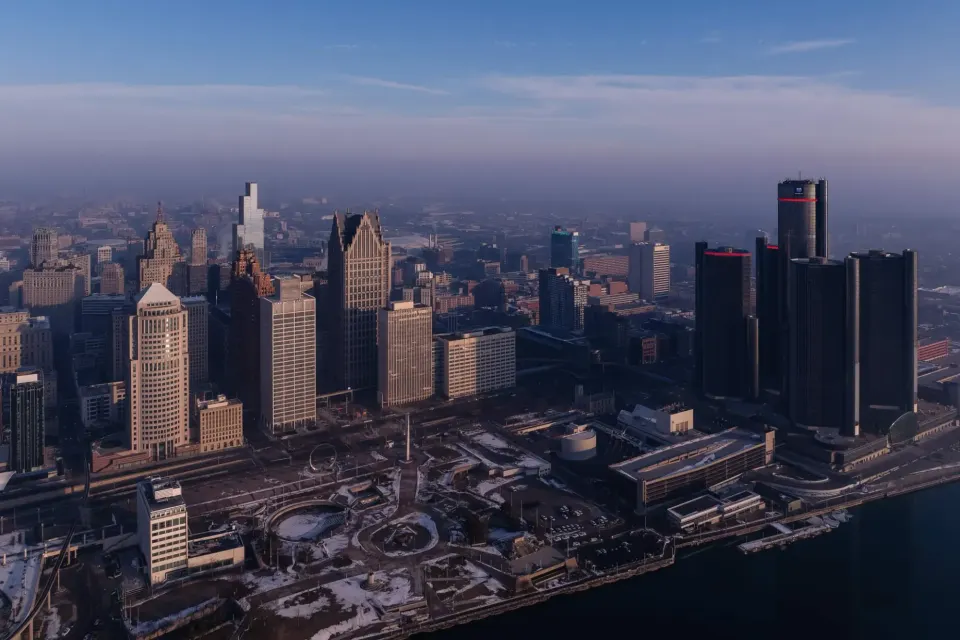






Greektown has been a staple of downtown Detroit for generations. I have so many great memories over the years. It's one of the most "city-feeling" areas of Detroit, and has a litany of great restaurants, bars, and more.
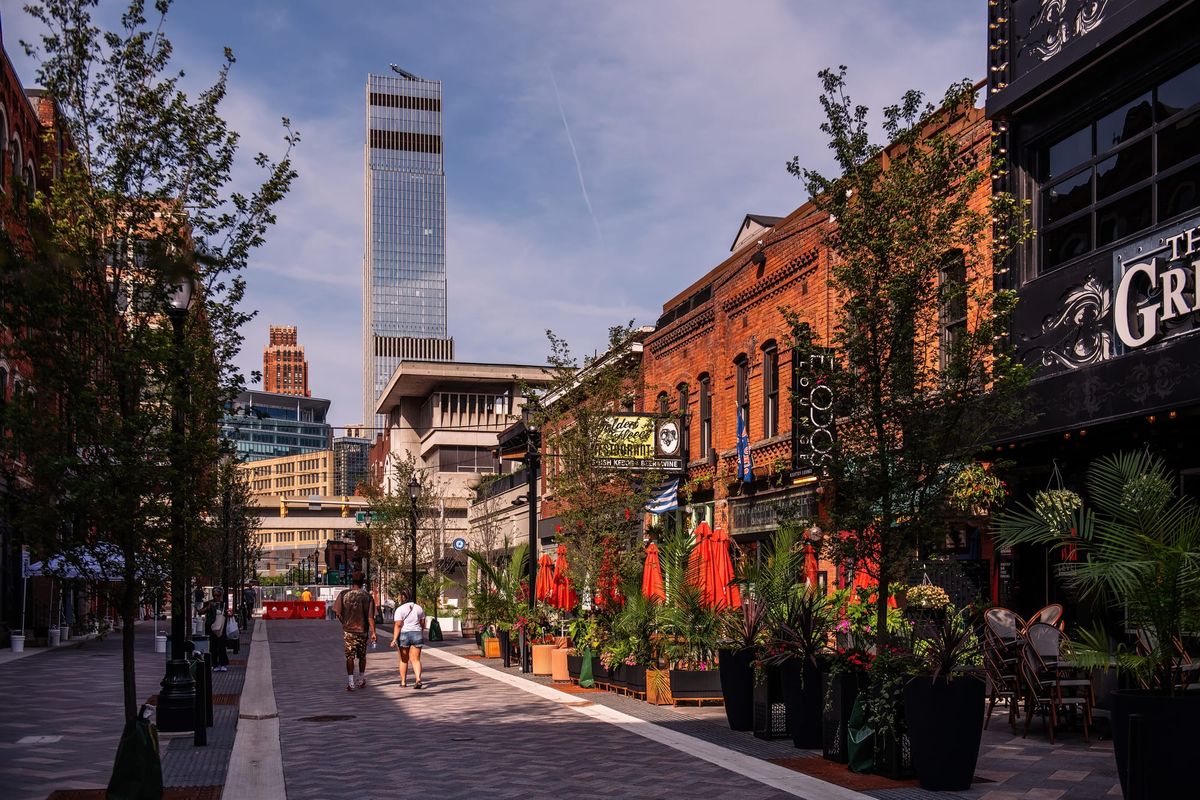
Now, a major transformation has made Monroe Street more flexible, pedestrian-friendly, and vibrant for the future.

Norris Howard and I sat down with Lori Singleton, landscape architect and design director at SmithGroup, to break down the vision behind the new Greektown streetscape.
We dive into:
- The Shift to Pedestrian-First Design and why sacrificing some on-street parking allowed for expanded outdoor dining, curbless walkways, and flexible plaza spaces.
- How clever systems and underground engineering keep street trees healthy without destroying sidewalks or drowning roots.
- And how incremental public space improvements — from the Dequindre Cut, to Beacon Park, to Capitol Park, to Grand Circus Park — are reshaping how people experience downtown Detroit.
We have a full transcript of the episode below.
Remember that our Summer Studio Open House is SATURDAY MORNING! It's free, but please RSVP on Eventbrite so we know how much coffee and donuts to get. https://www.eventbrite.com/e/1995592904096?aff=oddtdtcreator
Make sure to follow the show on Apple Podcasts, Spotify, or wherever you get shows.
Thanks to our members on Patreon! We have our new $3.13 tier to keep local media alive in the 313.
Transcript
This transcript was lightly edited. Please refer to original audio before quoting.
Transforming Greektown: Designing Detroit’s New Streetscape
Jer Staes: Hello everyone, I am Jer Staes. Joining me at the table is none other than the Prince of Brightmoor himself, Norris Howard. How are you?
Norris Howard: Back once again, Westside in the house! But today, we are talking about downtown.
Jer: Your neighborhood, in fact, my friend!
Norris: That is correct. It’s like the Sultan of Oman that lives in Zanzibar—I now am downtown, even though I am still the Prince of Brightmoor.
Jer: Here’s the thing that’s amazing about downtown: not only is it your neighborhood, but in a lot of ways, it’s the region’s neighborhood and the city’s neighborhood.
To talk about one of the most exciting developments happening—the new streetscape in Greektown, plus a few other things—Lori Singleton joins us. She is a landscape architect and design director at SmithGroup. Welcome to Daily Detroit, thank you for joining us.
Lori: I am so happy to be here.
Jer: Glad to have you. Let’s start with the biggest thing first: this new Greektown streetscape project. We did a social media video about it, and people were crazy about it. People have not seen this kind of investment in that area, and it also has a bold vision for the future.
From the landscape and design perspective, walk us through the process a bit. How do we get from where we started to here?
Lori: As most Detroiters know, Greektown was the place to be in downtown Detroit for decades, even throughout much of the city’s decline. It was a steady staple of destination spaces and a place that always felt safe and familiar to the larger community.
Now that so much has changed throughout the city and downtown—with so much investment—it was time to re-establish its role within that larger network of downtown public spaces. A lot of this came out of the 2019 neighborhood framework plan that the city put forward, which started looking at everything from mixed-use development to future development opportunities and improvements to the public realm. Monroe Street and the Randolph Plaza at the corner of Gratiot and Randolph were key public realm improvements coming out of that plan. So that’s really where we started.
Jer: When we talk about the way that it is now, it’s a place that has an expansive walkway and the ability to flex between having cars and no cars using a curbless design. What were some of the thoughts behind that, and how did that come through in the process?
Lori: Monroe Street has always been a one-way street. It used to have parking on both sides, then got reduced to parking on one side, and the street cafe zone was quite narrow—especially during COVID when the desire to dine outside was growing.
The restaurants and business owners realized they wanted more space for people to gather. There are hundreds of thousands of visitors throughout this district—even per day during the summer—so reshuffling the balance of what space is dedicated to cars versus pedestrians was key.
We also wanted to create a comfortable, materially rich, and vibrant environment. That includes adding street trees in a way that they can endure and sustain over time, and making the street so flexible that you could close it down into a pedestrian plaza or open it up with clear legibility for vehicles to safely move through.
It was a lot of maneuvering within a small space—only 50 feet wide from building to building. We studied many scenarios, and the willingness to sacrifice on-street parking and loading—moving those to adjacent streets—was key to reclaiming space for pedestrians.
Norris: What was the relationship like with the business owners during this process? Through the design and construction phases, what has their feedback been now that it’s partially complete?
Lori: A big shoutout to the Greektown Neighborhood Partnership, which is strongly committed to the success of the businesses and shepherd them through a process to address real concerns. A project like this is completely reconstructing everything from light poles to trees—it takes time and impacts businesses.
Providing access to storefronts during construction was huge. This project required give-and-take. You can’t have a massive cafe space and also have pull-up loading right in front when space is limited. Part of our role was making those tradeoffs clear.
Seeing the first waves of outdoor cafes on the street right now with big planted buffers is gorgeous. Feeling like you can walk down the middle of the street when it’s closed makes losing some immediate car access worth it. The partnership and business owners have been adaptable, and it has paid off.
Norris: I got a chance to check it out yesterday, and the curbless design makes getting around seamless. Considering the bars and taverns around there, those of us who partake will appreciate it—I’ve seen many a twisted ankle on those old curbs on Monroe!
When we talk about these large downtown projects—like Capitol Park or Beacon Park—transforming our public green space, where else downtown do you see room for potential improvement?
Lori: There are always projects on the board across the city. We did a master plan for Grand Circus Park that leaves core elements like the fountains and mature trees intact, but reorganizes circulation to make it feel much more welcoming and flexible for programming. That park is an incredible oasis in the middle of the city that is underutilized, and I’d love to see funding come together to realize that vision.
We’ve done a good job improving walkability and street edges downtown. Small mini-parks like Capitol Park, Randolph Plaza, and Campus Martius are transformative. Personally, I’m always eager for more access to nature and landscape. We’ve done an incredible job on the riverfront; how can we pull more of that into the core of downtown or along edges like Cass Park and greenway corridors?
Detroit’s transformation over the last 20 to 25 years highlights the magic of incremental impact. It doesn’t always have to be one massive project; these block-by-block, street-by-street improvements truly transform a place. Having started my career in Detroit in 1998, seeing this transformation is incredible.
Jer: It’s funny you mention 1998, because that’s when I started my career downtown as a floor manager at Channel 4 News. Back then, people thought I was crazy for walking from the TV station to Greektown for lunch! Seeing that transformation firsthand is amazing.
Because downtown has roots going back hundreds of years, every project seems to peel back layers of unexpected history and infrastructure. What infrastructure challenges did you face with this project, especially regarding the new trees?
Lori: That is a piece of the puzzle you can only plan for so much! Early in my career, you’d ask about utility maps and someone who had been there for decades just knew where everything was from memory. Downtown infrastructure goes back forever, and much of it isn't documented on modern plans. You always encounter surprises with building vaults or utility lines during demolition.
For the trees, we implemented a system called Silva Cells. These are underground support structures for the pavement that allow tree roots space to grow in uncompacted soil without damaging the sidewalk above. It acts like a mini column structure supporting the pavement while leaving open soil beneath.
Because space underground is tight, you can maneuver these cells around existing utility lines. We also installed under-drains connected to storm systems so the tree pits don't over-saturate and drown the roots during heavy rain.
Jer: How do you approach designing these spaces to encourage people to gather safely, inclusively, and comfortably?
Lori: We aim to create a canvas where outdoor life can naturally unfold. It’s less about adding a single massive attraction and more about creating an environment that feels familiar, timeless, and flexible for everyone.
On Monroe Street, using granite paving offers a beautiful, enduring look. In other areas, simple adjustments like adding lawn space where nothing existed before make a difference.
We’ve worked on greenways across the city, like the Dequindre Cut and the Joe Louis Greenway. At a community meeting once, a resident thanked us because the Dequindre Cut was the only safe place she had to teach her grandson how to ride a bike. That kind of real-world impact is the true reward of this work.
Jer: My partner is actually walking on the Dequindre Cut right now as we record! It offers a level of freedom and connectivity that makes it a vital gathering space for residents.
Lori: Absolutely. Places like Milliken State Park or Beacon Park give Detroiters safe, intentional access to nature, community events, and diverse public spaces—all free and accessible.
Jer: Lori Singleton, landscape architect and design director at SmithGroup, thank you so much for chatting with us today.
Lori: It was so much fun, thank you for having me!