
Downtown Detroit Has Turned Into A True Weekend Destination
 Jer Staes
Detroit, MI
Jer Staes
Detroit, MI
Player
Show notes
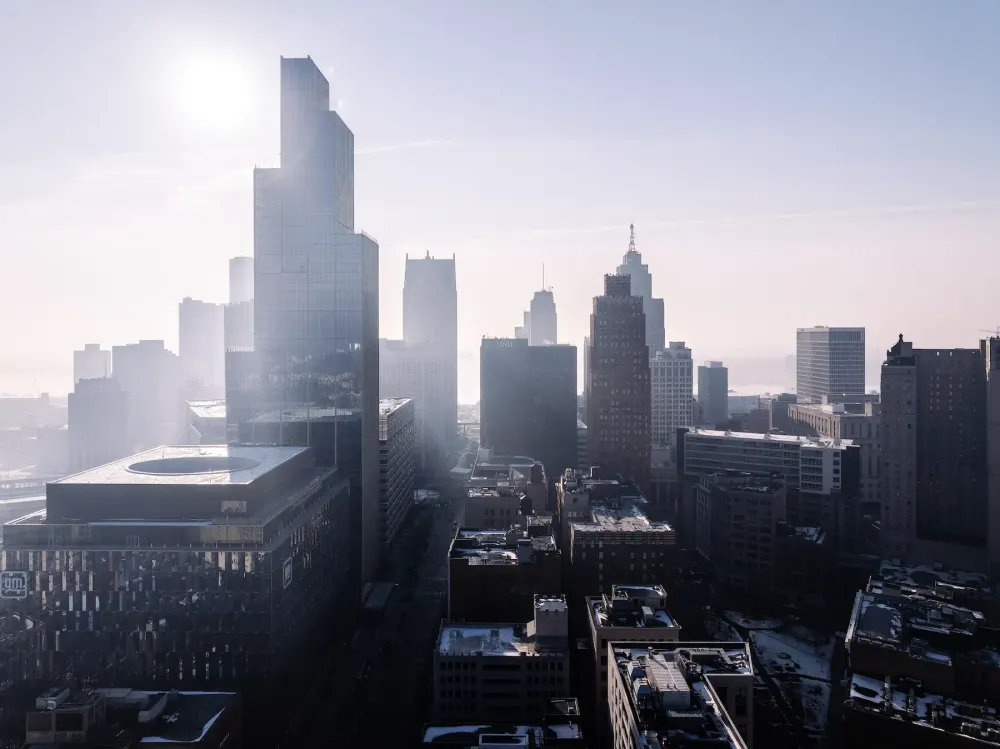
In the wake of the pandemic, downtown Detroit underwent a massive shift. Many left their offices to come back just a couple of times a week, and people looking for dining and entertainment on weekends flooded in. And the data shows they like what they see.
On today's show, I’m sitting down with Sofia Song, Global Cities Lead at the Gensler Research Institute, and Antoine Bryant, Managing Director of Gensler’s Detroit office, to unpack their 2026 City Pulse study.
The big takeaway? Detroit ranks at the top nationally for downtown "stickiness." That means residents aren't just coming down because they have to for work. They're choosing to hang out, eat, and linger at double the national average for discretionary visits.
There's a huge shift from an office-centric commuter hub to an 18-hour destination. And Detroit residents, according to the survey, are into it, too.
If you want to understand how intentional planning, better lighting, and activated spaces are changing our streets into a space with national-level urban design, you won't want to miss this conversation. You'll find a full transcript below.
Then, we send you out the door with some stories to know around town.
Don't forget our most recent audience survey!
Feedback as always: dailydetroit - at - gmail - dot - com or 313-789-3211.
If you don't already, follow us on Apple Podcasts, Spotify, or wherever you get shows.
Transcript
This is lightly edited, please refer to the original audio before quoting.
Jer Staes: On today's episode, we are digging into a new global study from the firm Gensler. It's called City Pulse 2026, and it is an annual look at how people experience central business districts from cities around the world, including Detroit. I'm really excited to talk about what this means, how this works into downtowns, and how this relates locally to Detroit.
Joining me to do that is Antoine Bryant, Managing Director of Gensler's Detroit office. It's been a while, welcome back to Daily Detroit.
Antoine Bryant: Glad to be here, Jer. Looking forward to it.
Jer: Good talking to you. And Sofia Song, the Global Cities Lead at the Gensler Research Institute.
Sofia Song: Hello, thank you so much for having me.
Jer: Absolutely. Okay, let's set the table for people really quick. What is City Pulse and why do you all do it?
Sofia Song: City Pulse is our annual study on urban experience in cities all over the world. We started during the pandemic in 2020 with just a modest four cities, and it has now grown to 75 cities in 30 different countries across six different continents. We have connected with over 140,000 people since we started, and we've built what's arguably the largest dataset out there on urban experience—how people are actually experiencing their cities. We collect this longitudinal data year over year, but we also pick a different topic to dig into. This year's report is really about that downtown experience.
Jer: What are some of the kinds of questions or metrics that you look at to help define that?
Sofia Song: For this downtown report specifically, we look at things like satisfaction, safety, and affordability. We look at the kinds of feelings that people have about their downtown and even citywide. We look at how optimistic they feel and what they want to see in the future, like what their ideal vision is of their downtown in the next 10 years.
Jer: So it's really resident and people-led, it sounds like.
Sofia Song: Yes, it's definitely people-led. Something about the Gensler Research Institute is that we really do try to understand human experience. Being the largest architecture and design firm, we believe in the power of design to improve that human experience. In order to do that, we really need to understand it.
Jer: Now that we have an idea of what this is on a larger sense, why don't we zoom in to Detroit a little bit, look at it through our local lens? What are some of the stories that it tells us about our downtown?
Sofia Song: I love the story of Detroit, actually. What we found—we have 75 cities, 34 of which are U.S. cities—is that we developed this measurement called the stickiness score. The downtown stickiness score is a metric that looks at how frequently people go to their downtowns and how long they stay. Detroit actually ranked first nationally in our stickiness score, ranking high on both halves: frequency of visits and lingering. That is rare. That number actually made us sit up because nearly a third of Detroit residents say that they go downtown because they enjoy it. It's discretionary visits, not because they have to, whereas the national average is about 16%. That's basically double the national average in terms of discretionary visits.
Jer: I think about recent changes in our area and our downtown with work-from-home and all these different things happening. I know on the ground from talking to various business owners, they can tell that while there are people still coming downtown for work, there seems to be a huge uptick in the vibes for visiting, for weekends, and for evenings. It's really interesting to see that kind of vibes-based aspect that I've found link up with the data that you're talking to.
Sofia Song: Absolutely. Respondents in Detroit do not see downtown as an economic engine.
Jer: Really?
Sofia Song: I say that because the number one thing that people want to see more of in downtown Detroit is job opportunities. But they feel that downtown Detroit is vibrant, and they enjoy walking around downtown. Food and beverage options score really highly. So, like you said, the entertainment, the recreation, the culture—that all ranks high. It's really jobs where we see that downtown Detroit could be more of an economic engine.
Jer: That tracks with some of the things that I've seen. For me, it's interesting when I travel to see the difference between downtowns that are just full of offices where work is their number one thing. To see that shift here in Detroit is very interesting. How does this play into how Detroit was built? For a long time, I think people thought that downtown was all offices. I remember back in the day with GM rehabbing the RenCen and all this other stuff—you go downtown to work. It's interesting to see that shift. How do we see the interplay of how downtown has been built up until now, and what we can think about for downtown looking forward? Antoine, maybe you can jump into the conversation a bit.
Antoine Bryant: I'll jump in, Sofia, and please don't hesitate to come on back because you have all the science behind it and I greatly appreciate it. I think one of the things you talked about is exactly it. Historically, for decades, downtown Detroit was a work center. When people think about the Guardian Building, it was the cathedral of finance. There were a number of different things that either were related to or a distinct part of the automotive industry, and people came down here to work. That began to shift pretty dramatically from the early 2000s. You always had Hudson's department store, which closed in '88, but now you have so many other food, beverage, and shopping opportunities that this is a place that is going to have, and is growing into, a 16-hour or 18-hour experience.
One of the things that's exciting is that we are the only city in the country that has all four professional sports franchises operating within a quarter-mile of one another. You have the Tigers and the Lions across the street from one another, and then you've got the Pistons and Red Wings about 600 meters up the street. People can come here for a game, and you've got many more food and beverage options than we had a decade ago. You have the number one downtown square in Campus Martius, which has been that way for the last three or four years now. You are really beginning to develop opportunities for a variety of households and backgrounds. Because of that, people come here to eat, visit, play, and for photo opportunities. It is a far different downtown than it was 10 or even five years ago.
Jer: I can sense that in the community conversations, too. It almost feels like downtown has changed in a way of what it is, not just about who lives down there. The overall energy of downtown has shifted very quickly, and it's something that I feel like a lot of the community is still catching up to that reality. Does that make sense?
Antoine Bryant: It does. There are a number of people who only have a picture of what downtown used to be, so now it's exciting when people come in and they're pleasantly surprised. Even for most of our residents who grew up here, downtown was always a place where a few people worked because they themselves may not have worked here. Or they would come to go shopping or come more episodically. But now it is a location where people not only are coming far more frequently, but as Sofia cited and the research shows, they're staying longer. It is not uncommon for someone to come to grab brunch on a weekend or come for lunch, and then hang around and shop, and then go to an evening play, a game, or the opera house. All of those things are concentrated in a very walkable environment. It's really embodied during the spring, summer, and early fall where this city really does come alive downtown.
Jer: I don't know if your data shows this, or maybe you know something from a general sense, but from how far away does a downtown like Detroit draw? I think about that from an economic development perspective. I look at it from people who come downtown and say, "Maybe I actually want to move here and be part of this." What kind of magnet is it?
Sofia Song: I would not actually have that data because the data that we present is all about residents of the city of Detroit proper. I actually don't have the data in terms of people outside of the city of Detroit coming in, but that's actually an excellent question.
Antoine Bryant: I think it's a great point and I can appreciate where you're going with that, Jer. What I can tell you tangentially, just from our work with the planning department and also talking to the Downtown Detroit Partnership on an extensive basis, is that we are getting an uptick in regional activity. People that might be from Metro Detroit are coming into town on a far more frequent basis. That has gone up over the last four years. And what we're having, which is also embodied by the uptick in housing that's being put up, is an uptick of residents that want to move into the city. Some of the highest opportunities for coming to the city to live are in downtown, which is evidenced by the fact that the downtown occupancy rate hovers around 95% to 96%.
Jer: I know that I felt like there was a little bit of a dip right during and after the pandemic, but just anecdotally from listeners who have been looking for places, it's tight out there. If it's north of 90%, downtown is tight.
Antoine Bryant: No, it definitely is tight downtown, 100%.
Jer: What are some of the opportunities that Detroit could capitalize on? You're talking about stickiness, and it seems to be doing well compared to its cohorts in a lot of areas. What are some of the opportunities to capitalize on, and what are some things that we could grow from?
Sofia Song: Earlier I did talk about jobs. From the data that we have, it shows that Detroit residents are under financial stress, especially surrounding things like affordability and financial stability—living paycheck to paycheck. Really looking at that financial side of things in terms of improving resident lives is one. The other thing I would say is safety, because safety was another thing that came up for Detroit. The number one street improvement that people wanted to see was safety from crime. Nighttime safety is a place where people don't feel as safe walking alone at night. We're looking at like 33% of Detroit residents feeling safe walking alone at night, versus cities like Pittsburgh where it was 46%, or Boston where it was 70%. Safety is another area that could be an area of opportunity.
Jer: It's always interesting to unpack that. I know this isn't in the data, but I look at the data of what downtown is as far as actual crime versus what we see, and how much of it is perception of safety versus reality. It's always tough because you see the big things on the news, but as a regular downtowner, I don't feel or see that on a regular basis.
Antoine Bryant: I'm glad you brought that up, Jer, because the perception versus reality thing is real, even for residents of a city. First of all, crime in Detroit has gone down over the last five years, and it's gone down precipitously in downtown. So much so that downtown is often cited as the safest neighborhood in the city. A lot of that has been evident and supported through infrastructure development. There's far more lighting now, not only on the main thoroughfares but also on the side streets than there were five years ago. There were infrastructure improvements from sidewalk improvements as well as vegetation; there were areas where things were cleared away so as to make easier throughways, as well as to have a more comfortable and more inviting environment for people to walk. There are far more people on the street, not only residents but also safety patrols and the like. So much of the concerns that Sofia has cited in the data, I would attribute far more to perception than actual reality.
Sofia Song: Those points are actually excellent. The investments in lighting have paid off because lighting in Detroit—almost 60% of residents said that the lighting was excellent or very good.
Jer: There we go, I didn't even know that.
Sofia Song: Detroit is at 60%, whereas the average is roughly 40%. So that investment in lighting paid off. You also mentioned welcoming to everyone, making sure that the area felt welcoming and inclusive. Detroit scored really high. It was like 80% who felt that downtown was welcoming to everyone, versus the average being roughly 66%.
Jer: I'll just be honest, that runs counter to the narratives you might see on social media. That's why I love these kind of things—looking at data from talking to people as opposed to just whatever an algorithm shows you. If you were to go online, it would feel like that's not the case. But this data, and this is of city residents specifically, shows that the vast majority of people find it welcoming.
Sofia Song: The city residents are all demographically diverse. This is a representative sample because it's demographically diverse by age, by gender, by education, and by income.
Antoine Bryant: I appreciate that, and what's really helpful, Jer, is what this data reflects is the real thing. They've made an intentional investment in making sure that our downtown is a place where people really want to spend time, it's not just a place that you pass through. This has been years of building the conditions for where we are right now, where we have real mixed-use, a real food and culture scene, and ground floors that are starting to be activated and not just hollowed out. These were very deliberate moves, and I think we're really starting to bear witness to the fruits of our labor.
As one anecdote, we've had two pretty significant conferences in the last four months. Just last week we had the International Placemaking Conference, with urban planners and thinkers from all over the world. Then we had the American Planning Association conference about two months ago. Both times, they were spanning the latter part of the week into the weekend, and both times, people were surprised and excited about how vibrant our downtown was on a Sunday. Which is normally kind of the dead time for a lot of downtowns. If you come to downtown Detroit on a Sunday in mid-June or late September, it is activated. It is hopping. People are having a great time of all backgrounds, all ages, and it's a really beautiful thing to see.
Jer: Downtown Detroit is definitely a proof point where you see that cities that are investing in the conditions that make people want to show up are succeeding, and downtown Detroit is just really far along that path. That's great to hear, I know people love to hear positive news. If people want to know more about this survey and look at more of the data, where can they go?
Sofia Song: Gensler.com.
Jer: Awesome. Well, Antoine Bryant and Sofia Song, thank you so much for your time on Daily Detroit. I really appreciate you.
Antoine Bryant: Jer, always a pleasure.
Sofia Song: Thanks so much for having us.
Chapters
No chapters for this episode.
Transcript
No transcript for this episode.
No matching lines.
Hosts & Guests

Comments
Up next
All episodes
Video People Mover Expansion? Dearborn Coffee Week, and a Downtown High-Rise in Danger
Today we are on location at Jabal Coffee House on Mason Street in West Dearborn to kick off Dearborn Coffee


Video Inside The $2.2 Billion Plan For Detroit's Renaissance Center
The RenCen was built for a world, and a way we used to approach cities, that simply no longer exists. We unpack the math, demolition mechanics, and new vision for Michigan's tallest complex.
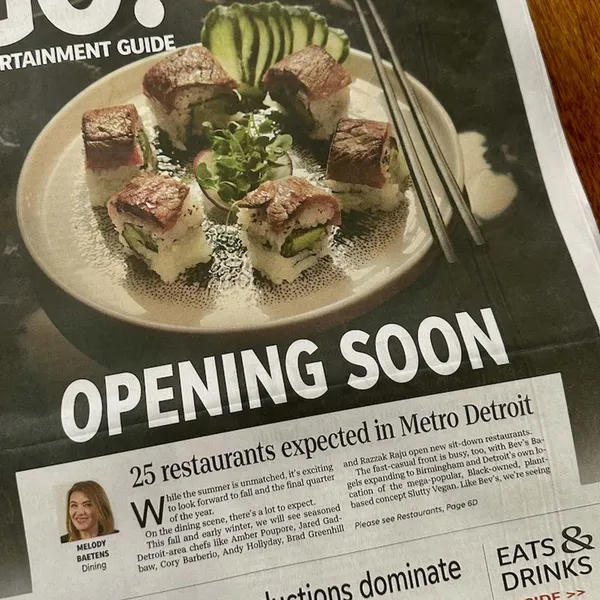
Video New Spots Opening Soon & What Michelin Means for Detroit (w/ Melody Baetens)
The Michelin Guide is bringing its Great Lakes ceremony to Detroit next April, and people have a lot of questions.