




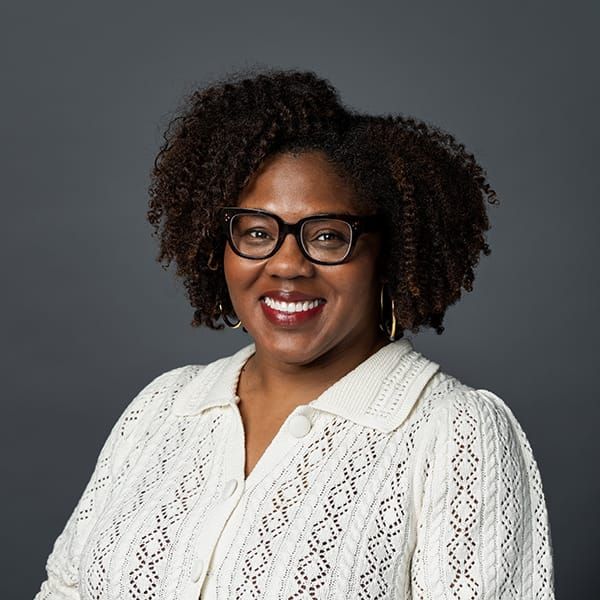
Today I’m joined by Khalilah Burt Gaston of the Song Foundation to talk about who actually builds a tech economy — and why it’s often the “geeks, freaks, and weirdos” who drive the biggest change.
We get into the recent Tech for Tomorrow report, what it would take to add 20,000 tech and innovation jobs for Detroiters and $6.3 billion in wages, and how cities like Indianapolis and Columbus are pulling ahead of Detroit, Metro Detroit, and Michigan.
We also connect the dots between tax policy, education, nonprofits, and how Detroit can really seize this moment.
You'll find a full transcript below.
As always, follow Daily Detroit on Apple Podcasts, Spotify, or wherever you get shows.
Feedback as always - dailydetroit@gmail.com or 313-789-3211, leave a voicemail.
Podcast Transcript
This is lightly edited for clarity. Please refer to the original audio when quoting.
Jer:
It’s good to see you. Before we get into all this, because you’ve got a new report out and there’s a lot we can follow up on from last year’s conversation, for those who are new here: What is the Song Foundation?
Khalilah:
The Song Foundation is one of the region’s and the state’s newest family foundations. We were founded in 2019 by Doug and Linh Song to expand opportunity, prosperity, and joy in Detroit, Dearborn, Flint, and Washtenaw County, where they live.
Many people know Doug because he was the founder of Duo Security and led what was really Michigan’s first unicorn – the first multi-billion-dollar exit. The Songs founded the foundation right before the pandemic, and then I came on to help launch it publicly about four years ago.
Because Doug is a tech entrepreneur, one of our strategic areas of investment is tech: how we expand opportunities in tech and innovation for Detroiters and Metro Detroiters.
Jer:
What drew you to the Song Foundation? I’m sure there are a lot of things you could do. What pulled you specifically to this work?
Khalilah:
By training, I’m an urban planner. I started my career in community development with a focus on real estate, but I’ve always been interested in how communities grow over time. I’m a Midwestern girl. I grew up in a city in Indiana very similar to Flint – a wonderful place to raise children and families in the 1980s and 1990s – and I watched my community really shift: job loss, increased crime, and a lot of change.
I became interested in how cities change over time and discovered urban planning as a field. I’ve always been on the periphery of anything related to cities and city development. I started in real estate and then was recruited into philanthropy.
I’d always been curious about tech, and this was a great opportunity to build a foundation from the ground up. Because Doug and Linh aren’t traditional philanthropists, they said, “We hear a lot about what foundations shouldn’t do. If you had an opportunity to build something from scratch, how would you do it differently?” It was a chance to be innovative and a little disruptive in the field.
Jer:
The last time we were together, we talked about how, as a city, region, and state, we need to “make more pie” – create more opportunities. Some of the work you’re able to fund as a family foundation is about looking under the hood and doing deep thinking that for-profits often don’t have the time or space to do. I’ve worked in the for-profit space; the bandwidth just isn’t always there.
Recently, you released the Tech for Tomorrow report about how to leverage tech and entrepreneurship to diversify this economy. Diversifying the economy is something I’ve heard every year I’ve been at this conference for more than 10 years: “We’ve got to get serious about it. We’ve got to do it.”
The Song family’s story and how they found success can add real weight to that conversation. Who did you work with on this report, and what are some of the top-line findings?
Khalilah:
We commissioned the report with the Fowler Foundation and the Kapor Foundation, which is based in the Bay Area and was founded by Mitch and Freada Kapor. Mitch Kapor is considered one of the godfathers of tech. He was named one of the 100 top innovators in American history by Time Magazine.
He and his wife created the Kapor Foundation years ago. They’ve been in the Bay early on and have expanded their work from the Bay to Atlanta and Detroit. We came together and decided to commission Detroit Future City to do the report.
I know people say, “Oh God, another report.” But sometimes you need to lay the foundation: Where are you now? Where are you trying to go? How do you get there? That’s important from a goal-setting standpoint.
Detroit Future City pulled together an advisory committee and we looked at what our goal should be as a city to grow comparably to other cities and to our region in the tech and innovation space. We also asked them to look into pathways for our future workforce: What would it take to prepare today’s youth? How do you upskill and reposition current residents to participate?
The report has been well received. I think people are surprised that we are actually one of the fastest-growing tech ecosystems in the country. We’re a little ahead of where people think we are, but we obviously still have a way to go.
Jer:
All of this is in the backdrop of so many metrics the chamber has been sharing with us about competitiveness for the state of Michigan and where we’re sitting. What are the ways that technology and diversification can start to turn those numbers around in a bigger way?
Khalilah:
There are a couple of misnomers about what it means to be a tech entrepreneur. Most of the time, people picture engineers or your typical STEM kid. But a lot of successful tech entrepreneurs, as Doug would say, are your geeks, your freaks, and your weirdos.
They’re sometimes the people who are ostracized, the ones who will challenge you at the table, the ones who have a different way of thinking about a solution. How do we make room not just for more jobs but for a culture shift that harnesses innovation and disruption for the benefit of our communities?
That’s part of what I talk about. It’s not always the student who’s valedictorian or has a 4.0 and is going to Michigan who becomes the next entrepreneur. It might be someone who is overlooked or forgotten but who knows how to think differently about a problem we all face.
Jer:
How do you think we encourage that culture shift?
Khalilah:
Honestly – and I know everybody won’t want to hear this – we need to be younger. We need to make more room for the younger generation to be at the table, and we need to listen more.
We need common-sense approaches regardless of political affiliation and the ability to work on solutions collectively. We also have to move past thinking about what my organization needs or what I need personally and instead ask: What do we need for the good of everyone?
We took a trip of about 60 people to Indianapolis to look at their innovation ecosystem. Something that stays with me is they said they were only able to create that level of collaboration because they asked themselves not what they could do more of, but what they could do less of to be more successful.
A lot of us come to the table thinking, “My org can do more of that,” or “I want to do more of that.” We end up with duplication and repeating a lot of the same mistakes, even if it’s a different administration or the intentions are good. That duplication still creates wasted effort.
I think about this in my own entrepreneurial journey. Often, there are only a couple of levers: you either have the resources to do more, or you need to do less to be more effective. “Less” can be more. If you hustle too hard, you can end up going nowhere – just going in circles. You have to focus on what brings the most value to people.
You also have to stay in it for the long haul. Sometimes we lack patience. We give ourselves three years or five years. It has taken us 20 years to get where we are. We have to think long-term: What does this look like over the next 10 years? The next 20 years?
The report highlights that if we continue along a concerted trajectory, we can add 20,000 jobs for Detroiters and generate about $6.3 billion in wages. That will take commitment, discipline, and all of us working along the same path, doing things that are complementary but not duplicative.
Jer:
Everybody brings their best to the table. I think about that even with the product we create. We try to do what we do best and let others do the rest, because otherwise you’re going to end up trying to do way too much.
You’ve been in this role for a few years now. I like to ask this when someone’s been in a role for a while: What’s something you thought when you started that you’ve now learned differently? How have you grown in this work?
Khalilah:
When I first took this job, I thought, “I’m going to work with a small foundation and this really cool couple, and I won’t be called on to lead externally.” I was very wrong.
The way we show up differently in philanthropy has caused people to want to learn from us. We are wildly popular with nonprofits because we really try to lower their administrative burden. Last year we received close to 800 grant applications, and we’re a staff of three. The interest in partnering with us has far exceeded our capacity.
I also assumed more of our peer foundations had a depth of knowledge in the tech and innovation space. Over the past four years, what we’ve heard is, “We need to learn more in this space.”
Jer:
I find that too. I take it for granted because I’ve done a lot of reporting trips in different cities. I really appreciate the work the Song Foundation has done. I haven’t been on any of the trips, but I have friends who have. They come back and say, “Wow, I see now what you’re saying about that city or about that reporting trip you did,” because they can see it for themselves.
It’s so important to get that outside experience – not to copy exactly what another city does, but to realize we’re not a unique snowflake. There are things we can take, adapt, and do better. That’s a healthier perspective than a negative one that says, “We’re just different, nothing applies here.”
We hear a lot about the Bay, Austin, Miami, New York – the big coastal tech stories. I think we sometimes feel like, “We’re a Midwestern city; tech isn’t for Midwesterners.” The point of the innovation road trip was to take people to Indianapolis. I’m from Indiana – a Hoosier – you can’t get more middle-of-America than that. We also went to Columbus. Both of those cities have outpaced us in job growth for tech and innovation-driven jobs, and they’ve started to replace their manufacturing job loss at higher rates.
Here we are in Michigan saying, “We can’t really do it,” while two of our competitor cities in the region have done it and are doing it better than we are.
And the weather isn’t all that much better in Columbus, let me tell you. I look at the Midwest ecosystem and see the opportunities here, but I also think we need to act quickly. We need long-term thinking, but we also need concrete actions now.
The last time I did a reporting trip down there, three or four years ago, I realized they got the people Detroit lost. Literally. In population numbers, they’re where I remember Detroit being when I was younger, close to a million people. They did it through a mix of approaches.
Here, it’s often “cut all the property taxes” or “raise all the taxes.” There’s rarely a nuanced conversation. Down there, you have Republican state leadership and Democratic local leadership. One thing I found interesting is that all the communities have an income tax and share the revenue. The conversation isn’t just “yes taxes, no taxes.” The way we talk about it here is oversimplified and often about the wrong things.
We need to keep our eyes on the right things. I was talking to a business leader at a fundraiser a few weeks ago. He said business leaders are really concerned about education. Doug told him he needed to talk with me, so we scheduled time to chat. I said, “The challenging part is taxes.” He said, “Oh no, we’re not concerned about taxes.”
Our per-pupil spending has gone down over the years because we cut tax policy and cut taxes, thinking that in the long term, that pro-business stance would produce all the other outcomes we need for quality of life – the quality that is actually attractive to families and to corporations.
Jer:
Can I tell you a little secret? I used to work in corporate. We made a lot of money in New York. We made a lot of money in Texas. We made a lot of money in California. We made a lot of money in the South. It did not matter either way; we made money.
As long as there is an equal playing field in that area, businesses figure it out. Whatever you end up going with, as long as there’s some consistency. That’s one thing I’ve found Michigan lacks in policy. We go back and forth a lot, especially with education, which ties into the tech issues you’re talking about.
Khalilah:
We’re a purple state, and to your point, we criticize the other side, and then the pendulum swings too far one way or too far the other. You have to stay in a safe harbor when it comes to things like education.
Look at Tennessee, Boston, Mississippi. People say, “We’re so much better than Mississippi, we’re so much better than the South.” That’s not what the educational indicators say.
The good thing about being in Michigan is that we have national and transnational foundations that have done work in all these “blue ribbon” cities we look at. If we really want to implement best practices, we’ll listen more, take the key points, and actually implement them.
A lot of times we go on these trips, grab the headline idea, and then come back home but miss the fine print – what they actually did to make it work. We end up “bastardizing” the best practice, and then we say, “It’s not working for us like it worked for them.”
Yes, you have to adapt to the local context, but there are technical aspects we don’t always pull forward because they don’t fit our specific agenda.
Jer:
When I think about common ground, that’s actually the most important part of this conference theme: common ground rooted in practicality.
Is the common ground rooted in what’s happening nationally? You can’t really call for common ground within our state or within Detroit and not call for common ground at the federal level. If these federal policies are instituted, there won’t be any ground for us to stand on.
I’ve had this conversation with a number of people. Folks talk about affordable housing and a range of issues. So many times the money isn’t actually generated by the city; it’s pass-through dollars with local control. That detail is super important.
We’ve seen this in the massive cuts of the last couple of years. I’ve talked to a number of people at this table who have seen those cuts. The money is all tied together. When people say, “The city needs to come up with more money for affordable housing,” most of the time it’s the city leveraging federal dollars. It’s not coming directly out of city coffers.
Khalilah:
That’s right – leveraging federal dollars, getting a match. I was on a panel last night with Kelley Kuhn from MNA. When you think about those economic indicators, there are nonprofits partnering with school districts, and nonprofits partnering with government to help small businesses succeed.
If we don’t have a social safety net in Michigan, not only will we lose jobs, but one in 10 jobs here are derived from the nonprofit sector. If nonprofits can’t keep their doors open, we lose the additional support for schools, after-school programming, small business development – all these things that, in most communities, are championed not by government but by nonprofit and social impact leaders.
Jer:
I did not know that one-in-10 number.
Khalilah:
Yes, one in 10. If you wipe out nonprofits, you increase job loss. Kelley shared last night that if proposed changes in federal policy related to Medicare go through, 250,000 families in Michigan will lose any sort of healthcare.
Think about families without healthcare who are also food insecure and may have their jobs wiped out. Children can’t learn if they’re hungry. Children can’t learn if they can’t get to school. Parents can’t focus if they don’t have jobs.
I don’t think we’re drawing the linkages between what’s happening at the federal level, how that will impact Michigan, and how it will impede our progress toward the goals everyone is talking about here this week.
Jer:
If people want to get involved, learn more, and support what you’re doing, what can they do? A lot of people know the Song name and are interested in your work, but they’re not sure how to plug in.
Khalilah:
You can find us on social media at Song Foundation. We’re on Instagram and LinkedIn. We also have a website at song.foundation. We have a tech founder, so it’s not .edu or .org – it’s simply song.foundation.
We launched our newsletter this year, so you can go to our website, subscribe, and you’ll hear about what we’re doing and how you can get involved. We’re also hosting a coffee day at Chroma on June 4th for people to come and cowork with us, so stop by and join us there.
Jer:
Awesome. Khalilah Burt Gaston from the Song Foundation, thank you so much for your time on Daily Detroit. I look forward to catching up with you in the future.
Khalilah:
Yes, we definitely have to make that happen.