








Detroit is finally seeing population growth and net positive migration — and a new coalition called MoveDetroit wants to keep that momentum going.
Our guest is Hilary Doe, president and CEO of MoveDetroit, to unpack a new incentive fund paid for by a number of partners, the Make Detroit Home program, and a neighborhood ambassador effort designed to keep and attract residents, entrepreneurs, and creatives.
Core incentives inlcude:
- Up to $500,000 total in benefits distributed to 313 current and future Detroit residents.
- Select participants can receive $15,000 to use for a business investment or work project, a down payment, home renovation, or other housing subsidy (including rent support).
- Other selected applicants are eligible for $1,000 in relocation or quality‑of‑life support, which can cover moving costs, security deposits, or things like gym memberships, kayaking lessons, or meal delivery from local restaurants.
We dig into why population growth matters for tax base and small businesses, how this work is funded, and why Hilary believes Detroit can become one of the fastest-growing cities in the Midwest if the strategy stays driven by Detroiters themselves.
There's a lightly edited transcript of the episode for clarity below.
Jer: Joining me at the table is a newsmaker of the week and a repeat Daily Detroit guest. We’re here to talk about growing and retaining Detroit’s population. Hilary Doe, welcome back to Daily Detroit.
Hilary: Thanks so much for having me. I’m excited to be here.
Jer: You have a new title since we last talked. You are now the president and CEO of MoveDetroit. I’m assuming this is not an athletic gym.
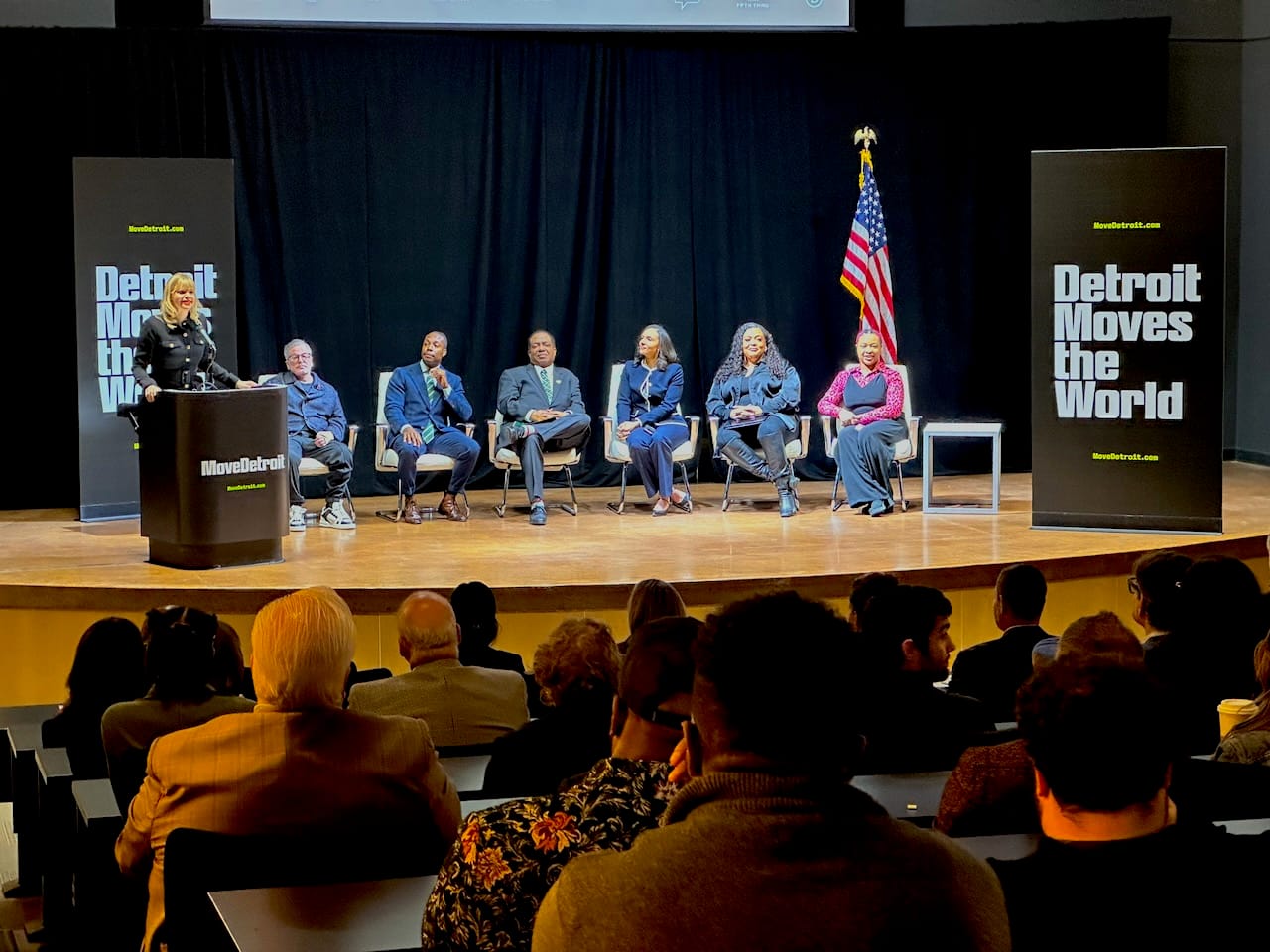
Hilary: It’s not. [laughter] It’s the MoveDetroit Coalition. We just had our press conference today celebrating the launch, but the mayor soft-launched us at the State of the City earlier this week.
The coalition now includes 50 organizations across corporate partners, foundations, community organizations, and universities, partnering with Mayor Mary Sheffield to do what it takes to retain talent already in the city and to invite former Detroiters and new folks back to Detroit.
Jer: What was the impetus behind this for you, the mayor, and the partners—why decide this is the time to lean into it? The previous mayoral administration, for a lot of people, was about dealing with emergencies—coming out of bankruptcy and those kinds of things.
Mayor Mary Sheffield has more of a look-up vision for the city, as a destination and world-class city. How does MoveDetroit fit with that vision of keeping and retaining people as well as attracting folks? I’ve heard initiatives like this over the years. What sets MoveDetroit apart?
Hilary: First and foremost, the coalition matters. Growth is a group project; you can’t do it by yourself. In my prior role as chief growth officer for the state, I always joked that the title was a misnomer, because the implication was you could do it alone—you can’t.
In past efforts in Michigan, we’ve often seen just a marketing campaign or a single talent program. What we’re talking about here is a big, holistic effort with the right people at the table, including Detroiters. This should be driven by Detroiters—their feedback in our strategy, programming, and messaging, with them at the table to shape the content we share. Otherwise, it won’t work.
We have the right people at the table this time to get it done. And to your point about a more positive vision, we do have momentum. We’re coming off two years of growth. We have net positive migration—more people moving in than moving out.
This is the time to keep our foot on the accelerator. It’s not guaranteed that we keep moving in that direction or pick up pace. We have to listen and continue making the investments we need to succeed.
Jer: When you talk about those investments, how does the rubber meet the road with some of these programs?
Hilary: The first program we launched earlier this week is our flagship talent retention and attraction effort. We’re starting by offering 500,000 dollars in financial incentives to people already here or coming back to Detroit.
You can access up to 15,000 dollars for a down payment or to invest in your business, and if you’re relocating, up to 1,000 dollars in relocation benefits. Beyond that, there are other program elements, like access to unique Detroit experiences and opportunities to plug into community life. These are designed to help you put down roots and connect to the community, making it easier to choose to stay.
Programs like this are data-backed. We’ve studied similar efforts across the country; some don’t work and others are very effective. We’ve focused this one on what does work—especially housing incentives, because we know they are highly motivating and have a big impact.
Jer: How did MoveDetroit come together?
Hilary: It was a combination of things. Across sectors in the city, there were a lot of people who wanted to lean into a population growth effort, in part because Michigan has been a first mover on population work statewide.
As you saw at the mayor’s State of the City, she’s been leaning into the “stay, return, move” concept to ensure people across the country see Detroit as a great place to live, work, and play. She’s backing that up with the policies we need to make it true. You heard her talk about housing and transit.
Those, along with things like median income growth, are the kinds of factors we know are required to kickstart population growth. So when you combine a mayor who cares about this and wants to see it grow with a coalition that agrees this is the right metric to focus on, that’s a powerful combination to drive Detroit’s growth.
Jer: With this program, there’s the “stay” portion—keeping people here—and the attraction portion. I want to talk about attraction, but on the “stay” side: from covering the State of the City, I know that was very important to Mayor Sheffield. What are the nuts and bolts of that? What does it look like?
Hilary: For MoveDetroit’s side of the “stay” work—because the mayor’s team is also advancing policies that improve quality of life and make Detroit a better place to live—we’re starting by focusing on Detroiters who have an outsized impact on the city’s growth.
The Make Detroit Home program, for example, targets entrepreneurs, small business owners, and working creatives as the first group we want to reach with these resources. They are job creators and placemakers, and making sure they can stay here and build their businesses and futures in Detroit is critical to long-term growth. We want them to stay, and by staying, they help others stay. Their presence improves their communities. They’re critically important, and that’s a key element of the “stay” effort.
Jer: That’s important to me because I can think about how many people—even on this Daily Detroit team over the years—now live in Chicago. We have more alumni there than anywhere else. I don’t want to keep seeing that. Over the last quarter century, I’ve watched people reach a certain talent level and feel like they’ve topped out—financially or in their careers.
Anything that opens doors for them so they can stay rooted in Detroit, I see as very positive.
Hilary: Beyond direct program benefits like Make Detroit Home, we also announced a neighborhood ambassador program today, which I think is critical to what you’re talking about.
The idea is to ensure Detroiters are the ones giving us feedback about what stands between them and building their future here, and what they love about their lives in Detroit. Those insights will shape our strategy, determine where we invest, and guide our programs. When we understand the challenges they face and the opportunities they see, we can point our resources where they’ll do the most good to keep people here.
We’ve announced a couple of programs, but there will be more once we get feedback from the neighborhood ambassadors.
Jer: I know surveys are a passion of yours, and we’ll get into that in a bit. Let’s touch on the attraction piece. It’s frustrating for some people: how do we make it work in Detroit, and how do we get more people to be here?
In my opinion, it’s going to be hard to make the math work for Detroit unless we start putting people back on these streets. I remember when the city had a million people in my lifetime. That 300,000-person drop—let alone the historic high near 2 million—has big impacts on infrastructure, school funding, everything tied to population.
Hilary: Absolutely. Sometimes we don’t recognize that more neighbors also means a stronger tax base to invest in quality of life. It also means more customers for our small businesses. A larger-than-average share of Detroiters are entrepreneurs; we have so many makers in this city.
We want plenty of people walking around, passing by storefronts, and becoming customers. That kind of foot traffic makes for a vibrant community. For a long time, Michigan—not just Detroit—has struggled less with retention and more with what we call the “replacement effect”: getting people who wake up in Nashville or elsewhere to say, “I’m going to try Detroit.”
We’re starting by focusing on Detroiters and people with connections to the city—ancestral ties, former residents, people who went to school here—who may now live in places like Atlanta or Houston. Your listeners know those folks.
Jer: And some of our listeners are in those cities.
Hilary: Exactly. Many of them are still big fans of Detroit or remember an earlier version of the city that’s different from what we’ve built together today. We want to encourage them to come back home and help continue building this place.
If we can design a program that makes that transition easier—helping them connect to the community and take advantage of benefits—then great. We’re happy to invite them home.
Jer: What’s the scope of these programs? How many people might be impacted in this early round?
Hilary: The first tranche of Make Detroit Home is intended to engage 313 Detroiters—you can probably guess why. I think your podcast may have had a 313 trivia day.
Jer: Yeah.
Hilary: But it’s not because we think that’s the total number of people we want to serve.
Jer: I think the real question is how many people even remember which numbers in their contacts still have a 313 area code.
Hilary: I’m jealous. I really want one. I’ve joked about going on Craigslist if anyone has a 313 number to spare.
Jer: I actually have my uncle’s number that’s been around since the 60s.
Hilary: From the east side of Detroit?
Jer: From the east side of Detroit.
Hilary: That’s amazing. All that to say, we don’t think 300 or so people is enough; it’s just the first tranche.
We want to start there and make sure we’re using data-backed strategies to assess whether the package of benefits and offerings is right. We’ll gather feedback from participants and then grow from there.
The long-term intention is to get Detroit into the tier of fastest-growing cities—first among Midwestern places with strong retention and return migration, and eventually among the fastest-growing cities in the country.
Jer: What would you say to someone listening who thinks, “I don’t know if I want change”?
Hilary: I’m very sympathetic. I’ve been doing this work across the state for the last few years, and in places like the U.P. or northern Michigan, I completely understand. Those are beautiful places, and it’s reasonable for people to say they don’t want to disrupt that.
The same is true here. Detroit has an incredible, unique culture. What I’d say is that we’re doing this in a way that’s driven by Detroiters, first and foremost, and in partnership with a mayor and administration that are thinking holistically.
If you build a growth strategy while also committing to housing and ensuring affordable, accessible options, you can grow without disrupting what people love. You can plan so that the Detroit we have on the other side of growth is still the Detroit we love today, instead of something unplanned and disconnected from residents.
Jer: How is all of this going to be funded?
Hilary: Our partnership with the city is programmatic, but we’re not publicly funded. The member organizations—those 50 groups that have joined—are investing in these programs and helping us make them real.
We have a number of corporate supporters, several foundations, and many community organizations involved, and we want more. It’s an open invitation for partners who want to join us.
We also have several universities involved. At today’s press conference, Dan Gilbert announced that in this first year he will match all the dollars we raise, which should help us get a strong head start.
Jer: When we last talked up at Mackinac, you were the chief growth officer for the state of Michigan. Why change gears? How did you go from that role to this one, and why focus on the city for people who might not know the story? There was a lot of talk about the statewide population push, and now you’re focused on Detroit. I’m glad to see it, but what was your thinking?
Hilary: That statewide work has been an incredible foundation. I’m proud of what we accomplished and what we learned, and it’s continuing. Communities across Michigan are still doing that work, incorporating that thinking, and rolling out growth office programs. I’m very proud of that.
As the governor moves into her last year before voters choose a new governor, I decided last fall to pick up a lot of that work and place it in a piece of long-term infrastructure, so we could keep going with what was working.
We’re seeing positive net migration for the first time in a long time. My favorite statistic is that our young adult population is now growing at the fifth-fastest rate in the country. Those are trends you want to sustain. I didn’t want us to take our foot off the accelerator.
So in the fall we moved that work into MIGO, the Michigan Institute for Growth and Opportunity, to carry the statewide work forward, and I’m still involved there. But the opportunity to do this work in the city I live in and love—where I firmly believe “as goes Detroit, so goes the state”—is incredible. It lets us lean in with sharp elbows.
The challenges and opportunities in Grand Rapids are very different from Traverse City, Saginaw, or Detroit. Focusing on one place lets you be specific and responsive to that community and tailor programs. I’m thrilled. I think we can have even greater impact and more impressive results if the work is driven by Detroiters. This is a tremendous opportunity.
Jer: What’s the biggest thing you learned in that statewide work—maybe something that surprised you, or a way you grew from it?
Hilary: Honestly, one of the joys of my career was getting to talk to so many Michiganders over the last few years and realizing that, even though conversations about change can be scary, people are open to big ideas. We had long-form conversations with about 20,000 Michiganders about what they loved about their place and what they wanted to build.
We came out of those conversations with people, almost without exception, supportive of the idea that we could lock arms and accomplish big things together. That was incredibly life-giving. If that’s possible statewide, I know it’s possible in Detroit.
Detroiters have no quit and endless creativity and vision. I can’t wait to do a similar volume of work in our neighborhoods alongside Detroiters, to build distinctive visions for each neighborhood and work with people to bring them to life.
Jer: If people want to get involved—whether they’re interested in these programs or in funding—how can they do that?
Hilary: Anyone can let us know they’re interested in joining a program or partnering with MoveDetroit at movedetroit.com. There’s a “Partner With Us” form where you can share how you’d like to participate and come on board.
We’d love to have you. It truly is a group project, and we need everyone we can. I think we’re going to get this done.
Jer: Hilary Doe, the CEO of MoveDetroit, thank you so much for joining us on Daily Detroit. And I should clarify: MoveDetroit is all one word; Daily Detroit is two words.
Hilary: Thanks for the clarification.
Jer: I appreciate you. Thank you.


