








Hey, it's Jer.
It’s hard to make good decisions when you don’t have the facts at hand.
I've sensed this in recent years, but there’s now data showing a growing gap between how Michiganders feel about where we are as a state, and what the numbers say about where we actually stand.
The Detroit Regional Chamber just released a Glengariff Group poll of 600 registered voters across Michigan. According to it, voters think we're solidly middle-of-the-pack.
When asked to rank Michigan among the 50 states on things like reading scores, income, college attainment, and unemployment, people consistently put us around 25th to 28th. In other words: safely average.
We’re not.
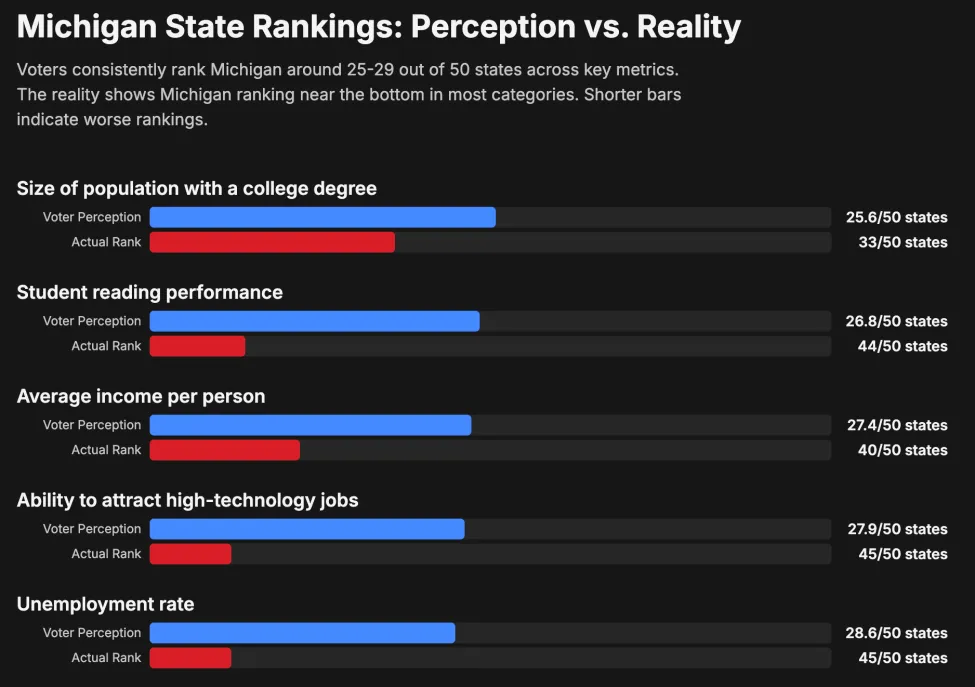
On the metrics that determine whether this state is set up for long‑term success, Michigan is in the bottom tier. According to the poll's benchmarks, while voters think we’re mid‑20s on fourth-grade reading, we’re actually around 44th nationally.
On per‑capita income, people guess high‑20s; the reality is 40th. Voters assume we’re middle‑of‑the‑road on college attainment at about 25th; the real figure is 39th.
And when it comes to unemployment, Michiganders picture something like 28th or 29th. The reality? 45th.
That’s the basement.
“In many ways, our house is on fire. In just one generation, Michigan has fallen from a top 10 or 20 state to a bottom 10 state in per capita income and educational achievement, which is not a recipe for long-term economic success. We need to come together and start having the candid and hard conversations about Michigan’s shortfalls. Our state needs to embrace what it takes to thrive in the innovation economy, or accept being ranked dead last in the nation, something that was inconceivable not that long ago.”
- Sandy Baruah, President and CEO of the Chamber.
This would be concerning in any context, but it's especially alarming given how strongly people say they want a different future.
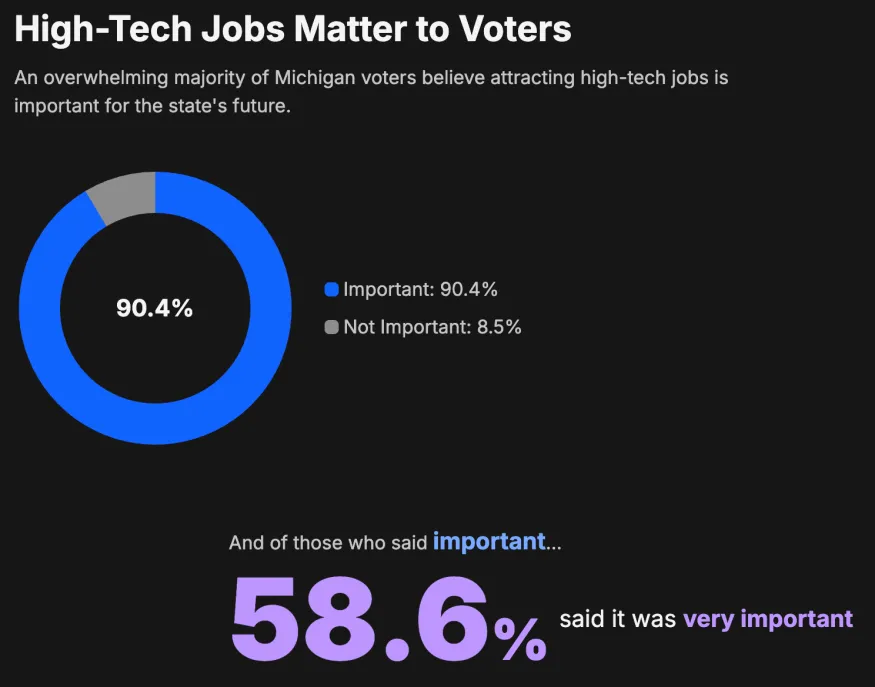
In the same survey, more than 90 percent of voters say attracting high-tech jobs is important — nearly 59 percent say it's very important.
So we have a population that sees tech as central to our future. But a state that, regardless of which party has been in charge, has consistently failed at the basics needed to compete for that future.
You don’t get sustained high‑tech growth when kids can’t read at grade level, when your workforce has lower incomes and fewer degrees than peer states, and when your unemployment ranking is sitting at the bottom.
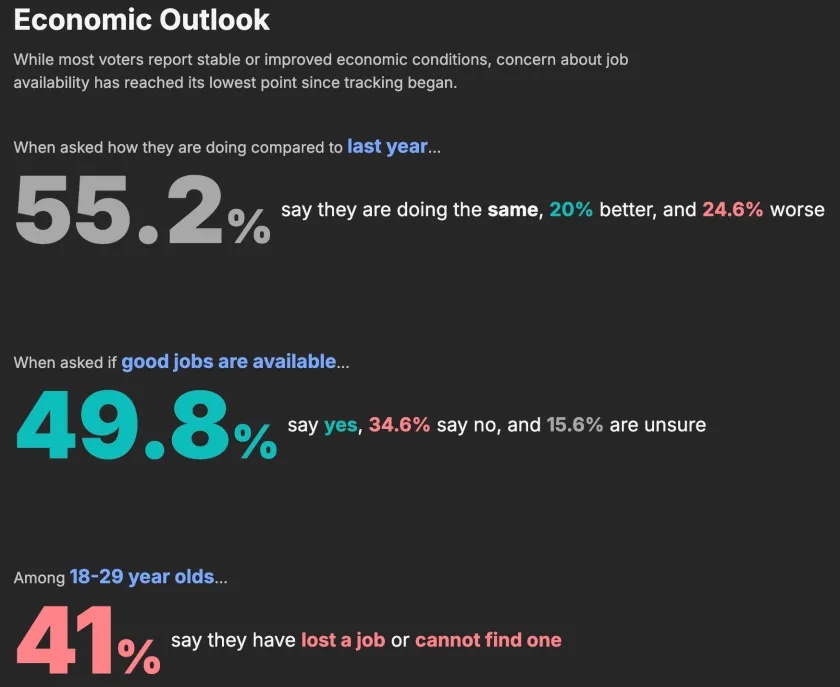
That said, voters are starting to see concerns about the availability of jobs.
What data centers?
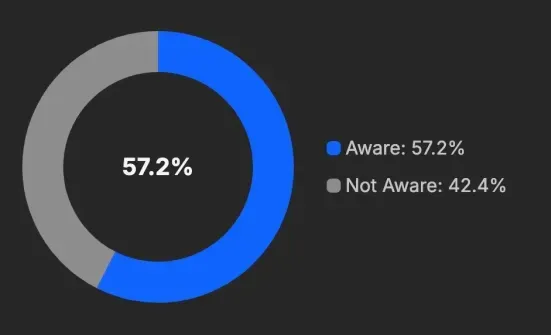
The same gap shows up again when the poll turns to data centers. Those are the big projects that have been the focus of heated fights over land use, water, and electricity in Saline, Livingston County, and other communities.
If you follow the news, you might think everyone in Michigan has a strong opinion on data centers, electricity rates, and water usage.
Turns out, they don’t. They might not have even heard of them.
According to the survey, more than 42 percent of Michiganders have heard nothing about them.
Awareness is deeply uneven: college‑educated voters are at roughly 70 percent awareness, while only about 27 percent of Black voters say they’ve seen or heard anything about data centers.
Voters without college degrees, working-class residents, and lower‑income residents are also significantly less likely to know what’s even being proposed.
That will shape how leaders react. When 40‑plus percent of voters don’t even know this fight is happening, the political risks of any decision look much smaller than the online discourse suggests.
Duggan pulls even in race for governor

The Glengariff/Chamber survey among registered voters shows Mike Duggan (I) at 29.8%, John James (R) at 28.3%, and Jocelyn Benson at 27.8% (D), with more than 13% undecided. That's essentially a statistical three‑way tie inside the margin of error.
That stands in stark contrast to a recent Impact Research poll — published earlier this month — which has Benson in the high 30s, James in the mid‑30s, and Duggan down near 20 percent.
It's worth noting that the Detroit Regional Chamber has endorsed Mike Duggan, and Impact Research has a track record of polling that leans Democratic.
So what’s the path forward?
Ultimately, that rests on Michigan voters. But it's hard to make good decisions with a distorted picture of where the state actually stands. And that's why this kind of data matters.
🎧 If you want to dive deeper, Norris Howard and I talked about it all on our Daily Detroit podcast. [Apple Podcasts] [Spotify]
And of course, let me know what your thoughts are by sending me a note to dailydetroit - at - gmail - dot com, in the comments, or by hitting up our contact form.
Thanks for reading. If this is your first time here, sign up here free for future notes, or consider supporting our independent work on Patreon.
Talk again real soon. Remember that you are somebody,
-Jer