





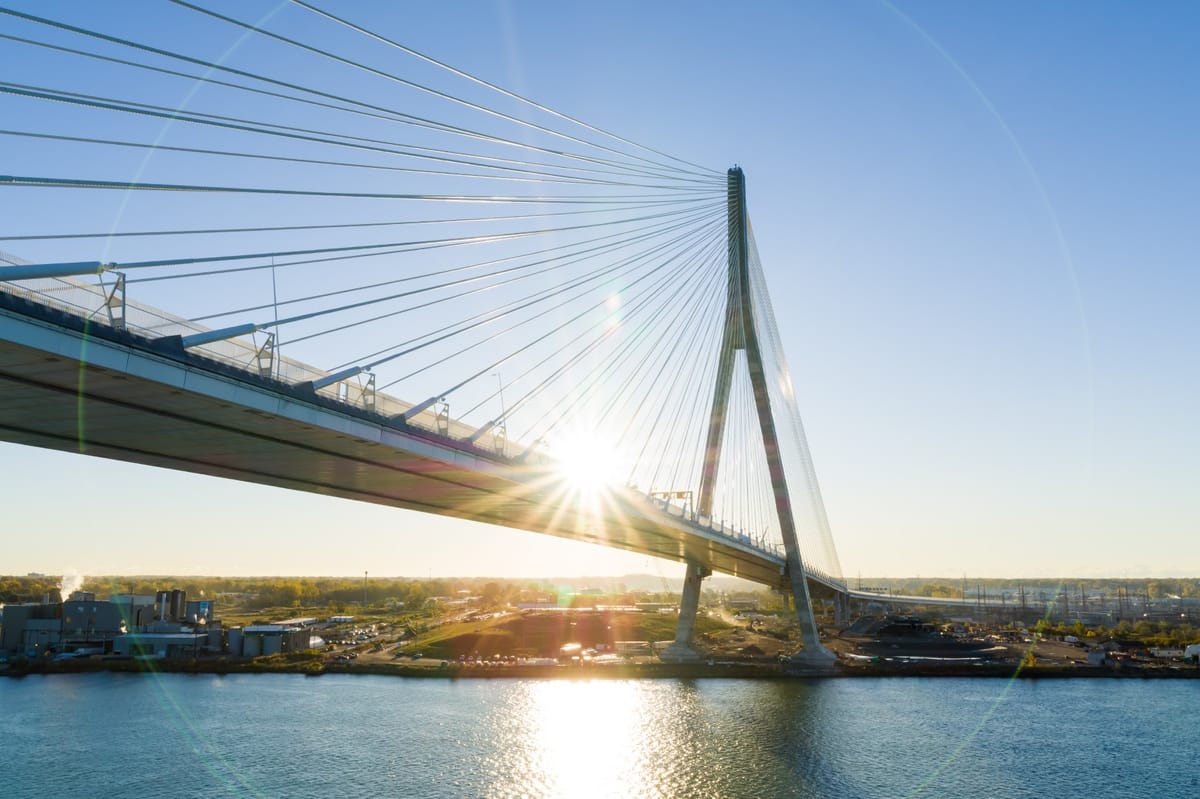

On today’s Daily Detroit from the floor of the Detroit Policy Conference, we’re digging into what it really took to get the Gordie Howe International Bridge this close to the finish line — and what it’s going to mean for everyday life on both sides of the river later this year.
I'm joined at the table by Michael Griffie, Detroit market leader for AECOM, one of the key firms behind the massive project.
We get into the nuts and bolts of a more than $4.5 billion, decade-in-the-making effort that doesn’t just include the record-setting cable‑stayed span, but also the new U.S. and Canadian ports of entry and a rebuilt I‑75 interchange designed to keep trucks moving and out of neighborhoods.
Griffie explains how engineers from two countries had to literally “meet in the middle,” navigating different regulatory systems, a frozen global supply chain, and a pandemic — and still kept the delay to about a year.
We talk about what makes a cable‑stayed bridge different, why the 1.2‑mile span and 770‑foot pylons matter, and how much trade will roll across once it opens.
There also will be a multimodal path that will let you bike or walk across the border — passport in hand — and the subtle design tribute to “Mr. Hockey” himself, with pylons that echo Gordie Howe’s iconic stance on the ice.
Plus, we touch on how Canada ended up fronting the money, why toll booths will all be on one side, and more.
Feedback as always - dailydetroit -at- gmail -dot- com or leave a voicemail 313-789-3211.
Follow Daily Detroit on Apple Podcasts or sign up for our newsletter.