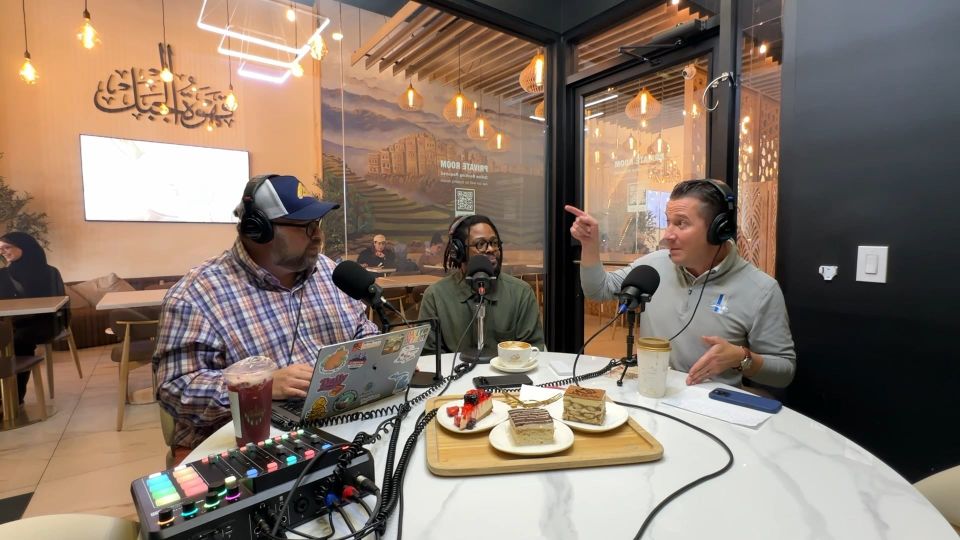






Today I’m joined by artist and entrepreneur Trice Clark, the creative force behind Kraftologie, to talk about building a new creative space in Detroit’s West Village, life after Joann Fabrics, and how better infrastructure can help more local makers actually make a living here.
You'll find the episode embedded above, and a transcript below.
Transcript
Please refer to the original audio before quoting.
[Jer] How did you get to the idea of Craftology for those who don’t know you?
[Trice Clark] I’ve been teaching workshops in Metro Detroit for the past 12 years, popping up in different spaces. I’ve taught everything from jewelry to woodworking. I think it’s time that we get our own space, and that’s what made me enter the Hatch Detroit contest. I’ve been trying to do Craftology inside other folks’ spaces, and it’s been a lot of runaround or splits that really didn’t make sense. So I decided it was time.
[Jer] That’s awesome. What is the concept behind Craftology as a business?
[Trice Clark] Craftology is a creative learning lab that makes it easier for folks to experiment with new hobbies. You can drop in and choose a craft from our menu, which would be a self-led experience—everything from watercolor to charcoal. Then we’ll have ticketed events that are instructor-led, like sewing, jewelry making, and woodworking. We’ll also have co-working and memberships, because sometimes you just need a really big table for a project. You’ll be able to rent space there, too.
[Jer] For people who haven’t seen the studio, this table is literally about five feet by five feet, so I’m a big fan. I think we got it out of an old library. It’s a nice table. I love the big sprawl-out, get-everything-out-there kind of setup.
My father was an artist and he was very focused in his mediums. He was very much into sculpture, painting, and a little bit of drawing. You’re working with a wide variety of crafts. Where was the spark in you to be so multidisciplinary?
[Trice Clark] That really came from my family. The last time I had an art class in school was 2001. After that, budget cuts in DPS took that away. But I was still able to stay crafty because I grew up in a very inventive family.
My uncle and I made go-karts and tree houses growing up. We would take lawnmower engines to make the go-karts. I grew up as the only girl, so whatever he was doing with his sons, I had to do, too. If they were on the roof fixing the roof, I was at the bottom picking up the shingles.
[Jer] That is so much fun. I love to hear those kinds of stories with people connecting with their parents and family.
What is the plan for Craftology now that you’ve got this money? Is this all the money you need, or does it get you over the top? Talk to me about that.
[Trice Clark] The $100,000 that I received from Hatch Detroit is seed money to open the business. It isn’t all of the funds I need, but I plan to go after Motor City Match and a few other grants. I already received a $25,000 grant from the Knight Foundation, the Art and Tech app, so that’s secured. I want to make sure I can retain staff once I open, so I want to go after more funds to have the people I need in place.
[Jer] Talk to me about the vision from a customer perspective. Let’s say I want to give you my money, and there’s a good chance that I do. How do you envision all of this working at Craftology?
[Trice Clark] Say you are a casual crafter who just wants a hobby—doing things without the pressure to perform. You would stroll in and pick a craft from our menu. We’d bring you all the materials you need and go over some tips with you. You’ll have access to our library of books if you need inspiration. Then you can sit there for 30 to 60 minutes, work on your project, and leave with a finished piece.
You can also purchase a craft kit to take home that we’ll curate with all the materials you need. We’ll have different craft supplies you can purchase, too, because—rest in peace—Joann Fabrics no longer exists.
[Jer] That’s so important. Talk about that a little bit, because I know a lot of people, and I think you do too, who really miss Joann Fabrics.
[Trice Clark] We miss our girl. We’ll have all the supplies you need to really work on a project. The people bringing those things in and doing the shopping to make sure the space is full of supplies actually know what you need because they are artists.
It’s not like walking into another store where everybody is just like, “I don’t know, aisle five.” It’s more like, “What are you working on? Show me. This is what you want to do? Okay, you need this type of scissors, these pencils, this type of thread.” We want to have an experience where people can take you from concept all the way through the creation of your project.
[Jer] It strikes me that could make you a real destination. You’re targeting the West Village area, correct?
[Trice Clark] Yes.
[Jer] That would make you a destination from even farther away because it is hard to find that kind of stuff. That’s very cool.
Is this for adults, kids, all ages? How does that go?
[Trice Clark] It’s for all ages. We want to be family-friendly. I have a 14-year-old son who is normally my assistant at all of my workshops and he’s my photographer. He definitely charges me. He sends me his invoice and includes snacks. He says he will not pay for his own meals; I have to pay for that.
[Jer] That’s smart. You’re getting a per diem, Trice.
[Trice Clark] I’m getting a per diem. We want to make sure you don’t have to leave your kids at home. You can drop in for an afternoon and we’ll have little tables and chairs for them as well. But if you want to attend something alone, we’ll have designated nights and evenings for that.
[Jer] In what ways has Hatch Detroit supported you through this process? Sure, there are the dollars, but there’s more to it, right?
[Trice Clark] Yes. It also comes with technical assistance. Even though I’ve been doing this for 12 years, I’ve never had a physical space. I need guidance and support with opening our doors. They’ll be walking through this with me every step of the way. I’m excited for that part, because they’ve been around 14 years. That’s 14 winners, but 60 businesses have opened through Hatch Detroit.
[Jer] Many are places people know and enjoy to this day. I can never forget La Feria—great tapas. There are so many others and so many entrepreneurs they’ve helped get started.
I think Hatch Detroit is really important because people will say, “Well, it’s $100,000.” It is a lot of money, but it fills an important gap in the ecosystem. There aren’t many people who can just come up with $100,000 or even $20,000. There are real financial gaps there, but it takes money to make money. You have to have that investment to get started.
If you don’t have enough, you can end up working yourself to death trying to make up that gap. It’s important that TechTown is one step in the ecosystem, but there are other fillers and partners as well. The good thing about winning things like this is that once you show people what you can do with those funds, they’re happy to give you the rest that you need.
So your goal is to be in District 5, West Village?
[Trice Clark] District 5, West Village—yes.
[Jer] What about the timing on this? Do you have a rough idea of when you’re looking to open, or is it still coming together?[Trice Clark] If everything poetically goes how I want it to, I’d like to open in May 2027. I held my first workshop in May 2014. I would love to open our doors in May 2027. When Sister Pie won, they opened a year later. I’d like to follow that trajectory.
[Jer] I think that’s really smart. People sometimes look at that and think, “They got the money; they should be open next month.” There are so many steps in between.
You’ve been doing this for a while now. What have you learned that’s different from what you thought when you started?
[Trice Clark] When I first started, I was doing things the hard way. I was making the projects overly complicated because I wanted people to feel like they were getting value for what they paid. That’s probably the opposite of what you want to do.
I was making things too many steps, with intricate beadwork. That could be a separate series of workshops you drop in on every Saturday. I was overdoing it. Now I’ve learned to simplify and give the project a chance to breathe so people can see how it can apply to something else instead of me trying to lead them all the way there. Another thing I’ve learned is to be fully stocked on inventory.
[Jer] I’ve learned that creative projects are often about enjoying the journey. We’ve made nearly 1,900 episodes of this podcast. It is always a journey; there is not really a “done.” If you look for “done” to find your joy, it’s always going to be frustrating. You have to enjoy the process. Sometimes it’s going to look great and sometimes you just tried.
[Trice Clark] Definitely. Slowing down has allowed me to do more aligned work instead of rushing to hit certain milestones.
[Jer] What has you most excited about Detroit’s future as an entrepreneur and an artist?[Trice Clark] I’m honestly very excited that all of my friends are moving back. I went to college in 2008 during the housing crash and all of that. A lot of my friends had to move away to work as artists. We had all of the cool underground things, but not everyone was making a living from that.
The infrastructure we have now means artists are getting proper support, resources, and their due. I’m excited that a lot of my friends—like Ian, who you had on the show—are able to move back to Detroit with intention and get their MFA in photography. Before that he was on Capitol Hill, but he felt something was missing and needed to come home. I’m excited for that to be the continuing story.
[Jer] I love to see that too. I’m a few years older than both of you, and I watched people leave. I remember being old enough to notice the difference in the streets between when we had close to a million people and now.
To see that energy come back is crucial. It’s beautiful because this is our city, and we need to be here for it.
[Trice Clark] Yes, and with Craftology we want to be part of that. We want to build out the economic infrastructure that artists need so they can earn. We’ll help them with curriculum development, and they’ll be able to host workshops through their memberships and develop kits to go along with that.
With what the Knight Foundation supplied us, we’re building out the online learning platform. They’ll also be able to earn royalties from their videos and tutorials.
[Jer] Trice, you talked about keeping things simple and doing less—you’re still doing a lot. I’d like to flag that for you. It’s amazing how much you’re doing.If people want to follow Craftology, support you, and keep up with what’s going on, where can they go and what can they do?
[Trice Clark] I’m @triceclark on all the things—T R I C E C L A R K. Craftology is @kraftologie_—K R A F T O L O G I E underscore. That’s where you can find me.