



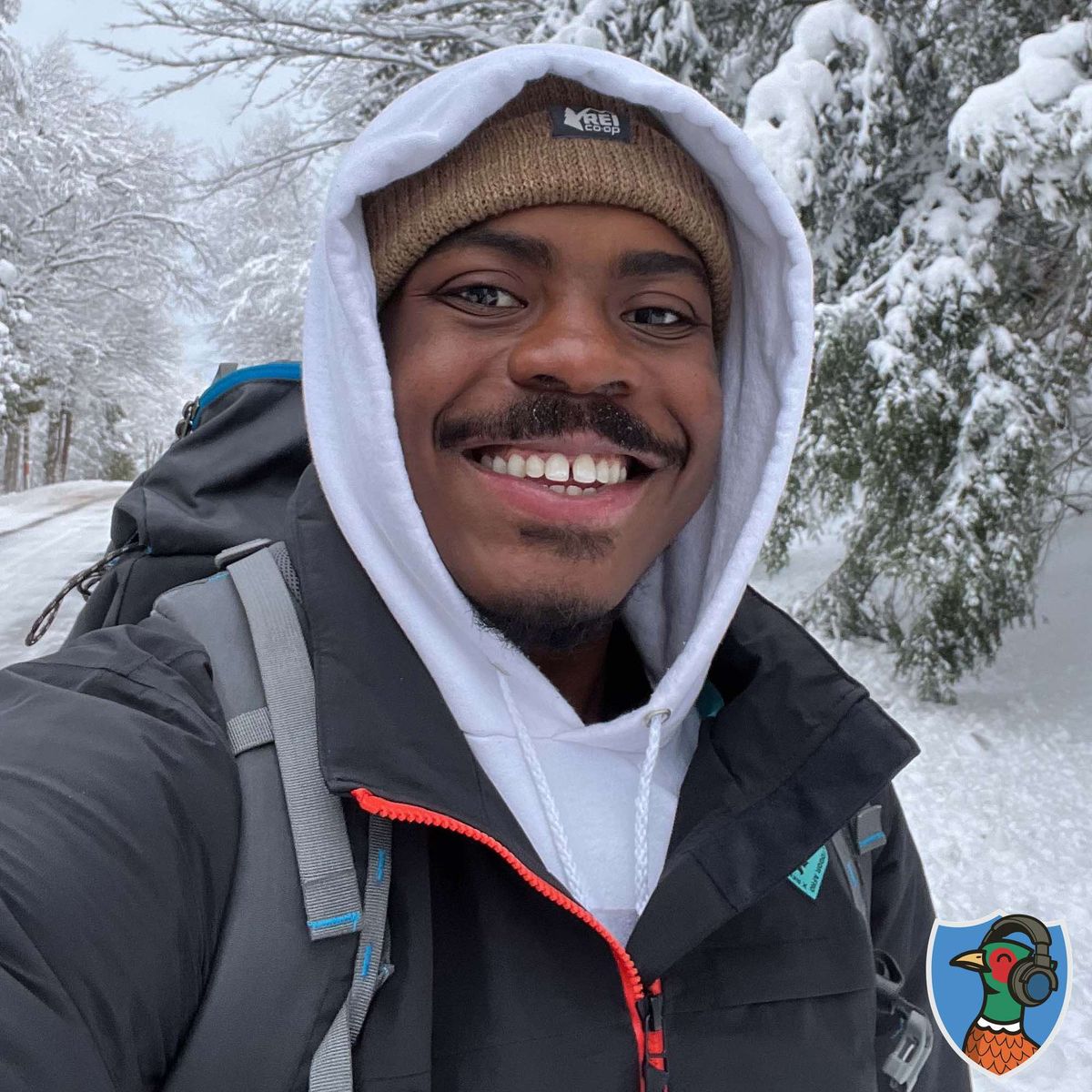
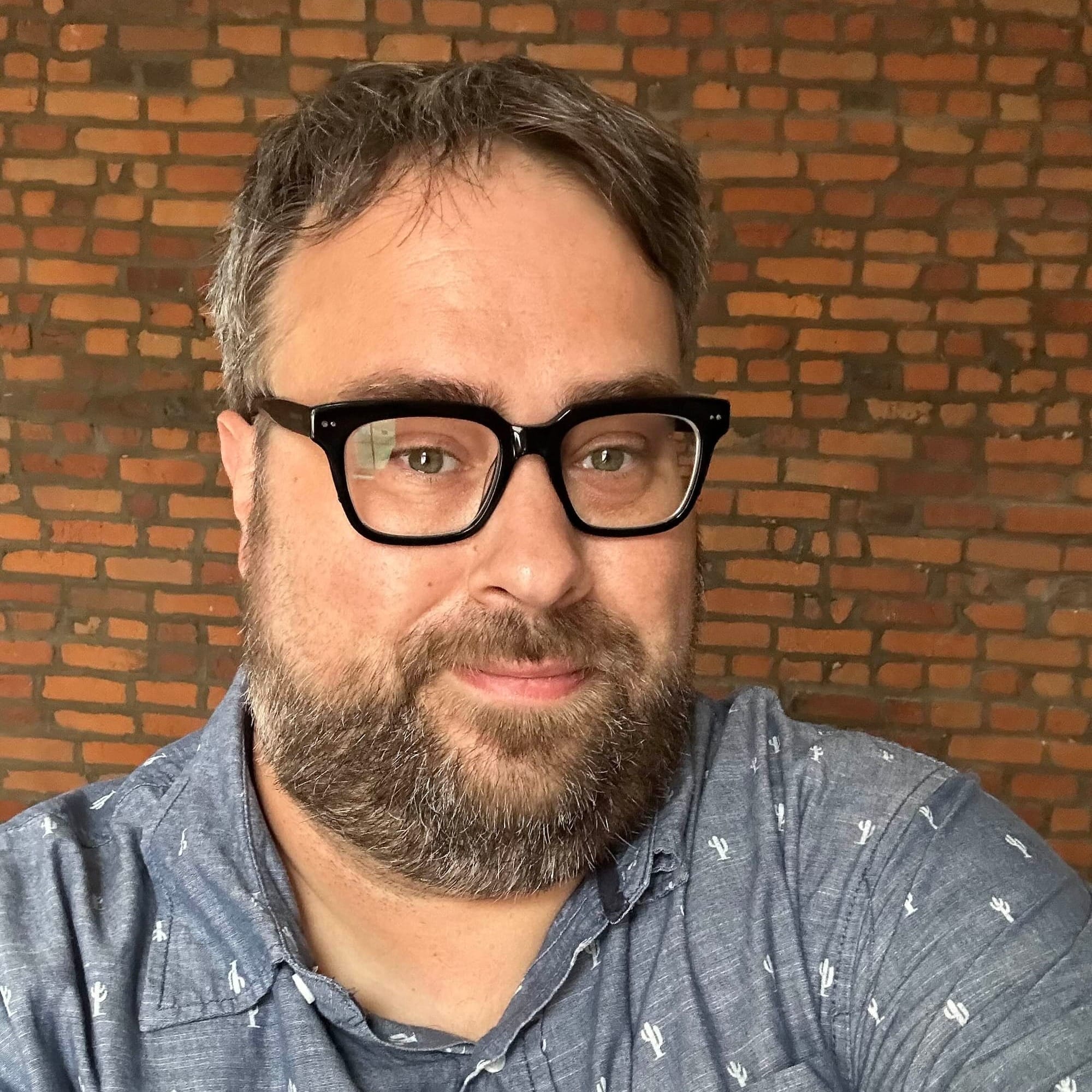
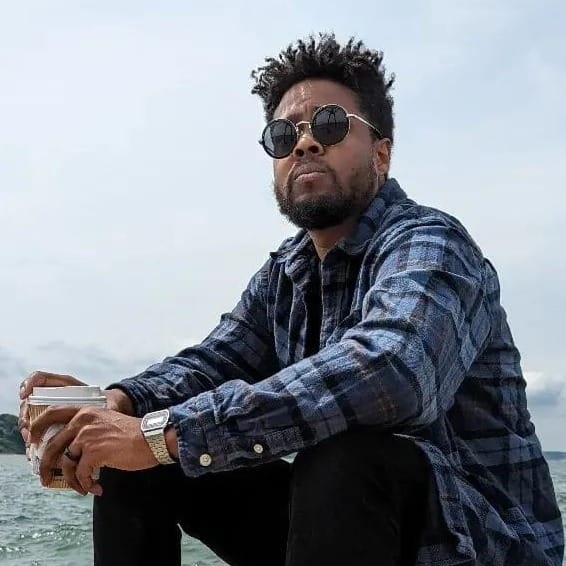
Detroit’s parks, rivers, and wild pockets are far richer and more active than many people realize, and Ian “Ian Outside” John Solomon is on a mission to show Detroiters what they’ve been missing.
In this conversation, we trace his journey from congressional reporter to champion of the city’s green and blue spaces, talks about groups like Black to the Land Coalition and Detroit Parks Coalition, and explains how hundreds of parks, marshlands, solar projects, and four true seasons make Detroit an “outdoor Mecca” hiding in plain sight.
We get into everything from Rouge Park’s Sugar Bush and Chandler Park’s rebirth to maritime life on the river, the fight over data centers, and how a majority‑Black city leading on environmental work could help rewrite the national narrative about who belongs outside.
You can also read a full transcript of the conversation below.
If you love this conversation, be sure to follow Daily Detroit wherever you get shows - on Apple Podcasts, Spotify, Overcast, YouTube, or anywhere else.
Also, we're supported by our members on Patreon.
Transcript
Please reference original audio before quoting.
[JER] Joining myself and Norris Howard at the table is a guest I am very excited to have here. You may have seen him on the worldwide webs, the internets, the social medias. One of the best voices I have seen come out of Detroit in a long time. I have so much love for the content this guy does.
Ian John Solomon, aka Ian Outside. He is an outdoor reporter and artist. It is an honor to have you at our studio at TechTown.
[IAN OUTSIDE] Thank you so much for having me. I really appreciate it.
[JER] It's an absolute pleasure for both of us because we're both excited about what you've been doing, and the stories that you're amplifying around Detroit are ones I think are so important to tell.
[IAN OUTSIDE] Mhm.
[JER] How did you pick up the path of getting into this kind of niche of content?
[IAN OUTSIDE] I actually started on the more political side. I went and got a broadcast journalism degree with a minor in political science, and that took me…
[NORRIS] Let's go.
[NORRIS] Oh, you got a minor in political science?
[NORRIS] Let's go.
[NORRIS] No, but let's go broadcast journalism.
[IAN OUTSIDE] See, you get it. So I thought I was going to be done, actually. I was a congressional reporter for a few months out in DC, and I was like, I don't know if this is it. It was cool, but I didn’t know if I wanted to spend my life that way.
At the same time, I was really building this personal relationship to the outdoors. When I came back to Detroit around 2021, I realized this outdoor passion I had actually did have space in this political journalism area as well. So I just started making content and telling Detroiters, “Hey, we're in the Great Lakes. Do you know this is like outdoor Mecca? This is the most amazing thing you can have at your fingertips.” I started showing people where to go, and that snowballed into events, organizational jobs, and here we are.
[NORRIS] For me, not just going through the content, but as somebody who grew up on the far west side of Detroit over by Eliza Howell Park and Rouge Park and all that, it was very strange that I was in a big city but had this outdoor connection we could always tap into and enjoy.
A video you made about people basically making sugar in Rouge Park was incredible. Share with us how you decide, “I'm going to go out, I'm going to check out this thing and show people this side of Detroit that a lot of people simply don't know exists.”
[IAN OUTSIDE] A lot of times it's like a strike of lightning. I'm enjoying something in the moment and think, “Maybe other people would like this too.” Usually that’s the case. But I’ve been doing it long enough now that a lot of people reach out to me. They’ll say, “Hey, we’ve got this thing going on, we think it's right up your alley.” If it's outdoors and about Detroit, it definitely is.
Specifically, that event is run by Black to the Land Coalition, and I've been working with them for years. They are the premier outdoor organization in the city. They do so much work connecting all Detroiters, but specifically Black and brown Detroiters, to outdoor spaces, as well as bringing in that Indigenous relationship that sometimes gets overlooked.
So the Sugar Bush video you’re talking about—the Sugar Bush is an area of maple trees in Rouge Park—was a perfect example: getting Detroiters outdoors in a time you’re not thinking about coming outside, and in a way you’re certainly not thinking about. We're outside boiling sap in the middle of the woods on the west side of the city. That video struck so many people because it was an amalgamation of this story in Detroit that's not getting told.
[JER] One of the things that I also think is important is that it's crucial to have diverse voices at the table around the environment, especially in the city of Detroit. There are some stereotypes around that.
We joke about this— we went over to Belle Isle for something, and you’re like, “I don't camp.” And I was thinking to myself, we have Ian Outside and Norris Inside.
[NORRIS] That's right.
[NORRIS] That's right. Let me put it this way: I don't camp, but I do have an affinity for the woods. In my opinion there are three very distinct sides of Detroit.
There's city Detroit, where you live in dense neighborhoods. Then you’ve got water Detroit—maritime Detroit—as in another one of your very successful videos. And then you’ve got woodsy Detroit, which is that northwest side of Detroit almost into Oakland County, Southfield and all of that, where we have these really gigantic parks that are largely unspoiled and honestly have become more wild now.
Seeing you explore those and bring more attention to those areas of the city touched my heart, because we used to do all this stuff over in those areas.
[IAN OUTSIDE] I know. There's so much going on in the city. I’m also the communications and engagement manager for Detroit Parks Coalition, so over the past couple years I’ve gotten to see just how much is going on in our over 300 parks in the city. Most people do not know that. There’s just tons.
[JER] Because so much of the conversation is taken up by Palmer Park, Rouge Park, and of course Belle Isle, which is not technically a city park but a park that's dear to so many Detroiters. I think it's important to tell those individual stories.
[IAN OUTSIDE] Totally. Like you said, those three get the big outdoor spotlight, but then there's Chandler Park, another big one on the east side that has a marshland managing millions of gallons of stormwater. There are smaller pocket parks on the east side that have art sculptures telling you the live air quality of the moment.
There’s so much happening across our parks that it's hard to know about it all, so I try to fill that gap.
[NORRIS] I want to go back to the genesis of all this. How did you begin to discover this love for the outdoors? Because again, as Jer said, there are these stereotypes that “we don't go in the woods and hang out and boil sap and go and hang out with the wolves on Isle Royale,” and stuff like that.
Tell me, how did you fall in love with the outdoors in order to become Ian Outside?
[IAN OUTSIDE] I tell this story a lot: it was a complete accident. My family had moved deep into Metro Detroit, almost like the Commerce area. At the time I was grounded. I was 17 years old doing bad stuff. So I was in this new space, away from the friends I’d had in my original neighborhood, and I had nothing else to do but explore these new green spaces around me.
It was immediate. As soon as I started walking around these spaces, it became a priority. Every single day I was going on a hike. For me, that reiterated that it's not that people aren't interested in this; it's more about access. As soon as you give somebody the chance, they latch onto it. I've seen that over and over doing this work. So it was completely accidental, but an immediate connection.
[JER] What's something about Detroit's environmental world that surprised you as you've gotten to learn more about it?
[IAN OUTSIDE] Just how much is going on. I talked about how many parks we have, but the amount of organizations and individuals doing different grassroots work is huge, and it goes from the grassroots all the way up to the city level. There are so many different initiatives.
As soon as you get locked into this community, your weekends are packed. You’ve got tens of hikes, tons of urban farm initiatives—just so much going on. That was the most shocking thing: every day of the week I could do something different as far as green space in Detroit goes.
And on top of that, it's going to be majority Black faces doing that. I didn't see the potential of it all at first. We talk about “inside Detroit,” but what Detroit is as a majority-Black city doing all this environmental work also has the potential to change the narrative of Black Americans overall. It hit me that we're at an intersection here that nobody else is, and that’s something I really want to push forward.
[NORRIS] I love that connection you made, too, because I think of a lot of other cities nationwide. I think specifically of Atlanta, which is a city that, even though it is very different from Detroit, has a similar relationship. It's woodsy, outdoorsy, and has a culture of outdoors people in greater Atlanta that I think is very similar to here.
Hearing that and hearing about all the groups you've been connecting with is very heartening to me, because I actually like to go outside in the wintertime. Hiking in the woods and stuff, not my jam.
[IAN OUTSIDE] See, you're rare.
[NORRIS] But wintertime outdoor stuff like going to a ski slope, snowboarding, sledding—I really love the quietness and the silence of winter.
[JER] Yeah.
[JER] I have a friend that does a ton of snowshoeing on Belle Isle.
[NORRIS] Yeah, exactly. Stuff like that is my jam. When I see you're trying to get more folks to go out all year round, that's what I love. Obviously, who doesn’t want to put a boat on the river and hang out? But Black ski clubs, ice fishing, going up north, and discovering things to do all year round is another element of your content that people might not expect.
[IAN OUTSIDE] I think that's another power of Detroit green space. We have four seasons. In Atlanta the shifts aren’t as dramatic. Michigan has summer-summer, winter-winter, fall-fall—all of our seasons are really exaggerated, which gives us the opportunity to engage in the outdoors in a really fulfilling way.
On top of that, given our landscape, you can kayak, hike through the woods—so many things. Belle Isle alone holds almost every outdoor recreation activity you can think of outside of skiing. We're not going to have Denver-style mountains, but you can still ski nearby. I think it's this perfect balance: we have everything. It’s not the most extreme version, but you can do almost everything you’re interested in here.
[JER] You mentioned Belle Isle, and you've talked a bit about that video you did around Detroit being a maritime city. That's very close to my heart. My family was very involved in boats and ships and shipping, and I was the kind of kid who would get the newspaper—there used to be those tables that showed when the freighters were coming by. I’d go down to the park with my newspaper and wait for the ships to come by.
[IAN OUTSIDE] I didn’t know that happened.
[JER] Oh, it was a whole thing back in the '80s. My grandmother stayed over there right by the Irma Henderson Marina. There’s a little park over there by the Manoogian Mansion. It's a super cute little pocket park.
For you, how did you get into the maritime side of things and discovering that importance? And what would you share with people about ways to get more involved? Because I think a lot of people look at the river, they go up to the river, but maybe they don't go into the river or into the lakes.
[IAN OUTSIDE] I’d say I got into it through a generational relationship that was kind of severed. My grandfather was really into the outdoors. I heard he ran a Boy Scout troop on the east side back in the '70s and '80s, and he constantly had my parents and my aunts on the Detroit River fishing. My mom and my aunt didn’t continue that tradition, but I was constantly hearing about it.
I think that’s a relationship a lot of Detroiters have, especially with our history from the Great Migration. Many of us have grandparents who were really into outdoor recreation, but it got lost in a single generation. That was always in the back of my head. I understood Detroit as a fishing city.
Since I moved back, I've been able to live in Rivertown, which gives me a specific relationship to the river. A lot of people aren't at the river at 6 or 7 a.m., when all those boats are out. If people really want to get involved, the first step is reorienting yourself. If you haven't been to the river on a spring day at 7 or 8 a.m., make it a priority. It’s an experience you won’t get anywhere else. You’ll see there are hundreds of boats on this river. It’s impossible to unsee once you do.
Just get down there and reorient, because there is an access barrier. Not everybody has a boat, and there aren’t a lot of fishing tours. I’ve heard of a couple—if you know, you know—but it's not something we’ve really invested in as a city from a tourism standpoint. So step one is to go down there and show yourself what's available.
[JER] I know there are various kayak rental places and things like that you can do. But I really would encourage the city to invest in that kind of stuff. I’ve always wondered about this: for the Grand Prix one year, when I was working in my corporate life, they had a shuttle ferry from downtown to Belle Isle for the Grand Prix for two days as a test, and it was amazing.
[IAN OUTSIDE] Sounds perfect.
[JER] It was perfect. I hold on to that memory 10 years later—it’s been 10 or 11 years. We need to think in that way. There’s so much we could do to make the riverfront even more accessible than it is. I think it just takes that extra push.
[IAN OUTSIDE] I definitely agree, especially on the heels of the riverfront having so much investment over the past 10 years. We are, I think, four years in a row the best riverfront in the country, and I’ve traveled to a couple different riverfronts and I see exactly why we keep winning. There’s no comparison.
The river itself—technically it’s a strait—but you’re not going to another city where the water is blue and turquoise the way the Detroit River is. There’s so much there. Now we have Great Lakes cruise ships docking every summer as well. There’s potential there that I hope we really lean into.
[NORRIS] Yeah, 1,000%. Now, I do want to ask a tougher question, because as somebody who is a journalist and takes in this information, one of the big environmental discussions in Michigan right now is around data centers and how they could potentially impact the environment.
As somebody who spends their time in the environment, using and being among these resources, are they a thing that concerns you?
[IAN OUTSIDE] Oh, absolutely. They're a major concern because more people are becoming aware of the resources Michigan has, and data centers are really looking at Michigan. We're surrounded by water, we have milder temperatures, and we’re actually the perfect place. We have so much rural land.
We don't want those. They can pollute—and not just in the traditional sense. Noise pollution, air pollution, all of these things disrupt. They’re also going to take up spaces that maybe should still be used for food, or for recreation.
Michigan does have a lot of space, and I think it's up to us to be really engaged in how it gets used in the future. That’s why I think urban folks in Detroit and rural folks in Michigan really need to start talking more, because a lot of our issues, especially future ones, are in direct conversation with each other. So: no on data centers. Absolutely not.
[NORRIS] Yes.
[JER] Data centers are one thing, but what about the balance of development and the space we have in the city? A concern a lot of people have is, if we add more people or add new things, we're going to lose that nature side. How do you think about that balance?
[IAN OUTSIDE] I don't think that's too much of a worry. We have so much space in Detroit. Like we said before we started recording, we could double our population and still have a ton of space in this city. So I'm not really concerned about population coming in.
In fact, if you look at Detroit versus the suburbs, what Detroit is doing right now is spending tons of money on our parks, thinking about our solar fields coming into vacant spaces, and asking how we utilize this in a way that's really equitable and can help the city.
If you look to the suburbs, they’re still doing big large‑scale investments developing over rural and green spaces. I think Detroit is doing the opposite. We’re seeing our green space as an asset.
I'm writing a story right now for Planet Detroit where we’re thinking about adding more green space over I‑75. They’re thinking of capping some of the freeways and adding parks there. I think Detroit has space for more people, and luckily we're at a juncture where people are really seeing our green space as an asset, so I'm not as concerned about losing it.
[JER] When you talk about solar fields, for people who might not know, what are you referring to? I think I know what you're talking about, but for listeners.
[IAN OUTSIDE] There’s a big urban solar field project happening in Detroit right now. We’re going to be the first city to have large‑scale solar fields in these more vacant areas. One of them is actually in the neighborhood my mom grew up in, and they’re the first ones having it built. There are about 40 acres in the Van Dyke–Lynch neighborhood currently being built into a solar farm that will pull in solar energy to help add into the grid of the city.
There is a lot of discussion to be had about that and how it gets done in the most equitable way. There are a lot of people against it and a lot of people for it. I'm personally somewhere in the middle.
There are three different neighborhoods across the city: Van Dyke–Lynch, another near the State Fairgrounds, and there’s another one I'm not going to name because I think I'll get it wrong.
[JER] Houston‑Whittier.
[IAN OUTSIDE] Houston‑Whittier, yes, exactly. These are spaces that, for the most part, were very vacant, and we’re asking how to utilize them in a way that makes sense. We don't think people are going to move back into these spaces. What does the future of them look like? Again, it’s contentious, with many opinions, but I think we’re thinking in the right direction.
[NORRIS] There already is one, I believe, in the 96 and Greenfield area, where it was a former park and there used to be a rec center there. That land sat unused for almost two decades. Now there's this big solar farm there that allows that land to be used for something.
That's a big thing for us here on Daily Detroit and for a lot of our listeners: talking about the use of land. People love the urban farm story. People love hearing about reclaimed woods and things like that. But we also think about how land can be used for everyone, even passively. Solar farms are a great way to start.
The city has made a massive commitment. I forgot how much of the percentage of municipal power they say they want to come from solar in the next 10 years, but it's most of it.
[JER] It's interesting to see that too. I'm all for the innovation, however it lands. I like the idea that we're thinking about things in different ways.
You do a lot of work around parks. I’ve got to ask: if you have a selection of a park or two or three that maybe people haven't heard of but should go visit and check out, where would you send them?
[IAN OUTSIDE] Ooh, okay. I think I mentioned it earlier: East Canfield Park on the east side. That’s the park that is an art sculpture park. One of the sculptures there is by an artist named Jordan Weber, and there's a solar‑powered light on it that shows you the live air quality of the moment.
I think that’s an incredible art piece, especially in that park, because it shows a more nuanced way we can engage in green space, and it can also serve the community. That's a huge issue with our industries around the city: how are they polluting our air, and are we getting the correct numbers? Here we have a green space that is both a place for recreation and a legitimate community tool for health. So I’d definitely go there.
I’d also say Chandler Park on the east side. A lot of people hear about it, and in the past it didn’t have the best reputation.
[JER] I think about it too as the golf course. I grew up that way over off Eight Mile, and in my head I’m always like, “golf course.” I know there's more, but my head keeps saying golf course.
[IAN OUTSIDE] There’s so much more. There’s that marshland area that’s taking in millions of gallons of stormwater and is a huge education hub. Grad students from Wayne State go there to study the ecosystem that's been growing in the seven years since it was installed.
There is the brand‑new Chandler Park Sports Field, a huge complex with indoor sports facilities made for soccer, football, lacrosse. There’s free programming there literally every single day but Sunday, all through the day. It's amazing. There's a water park, a skate park, a community garden—I could keep going.
That’s a park I like to spotlight because it’s huge, but 15 years ago people talked about Chandler very differently. I think we need to change that narrative as we move forward.
[JER] Well, Ian John Solomon, aka Ian Outside, you can find him so many places at @ian.outside, as well as Amplify Outside. It’s really an honor for you to share your knowledge and experience with us. I really appreciate you, and when things are happening, I hope you come back sometime.
[IAN OUTSIDE] Absolutely. I really appreciate coming on here—spreading the Detroit green gospel is all I want to do. So I appreciate it.
[NORRIS] Listen, I've got an urban garden. I'm hooked.
[IAN OUTSIDE] Perfect.